Opinion: Mercedes-Benz Interiors Have Become Insane
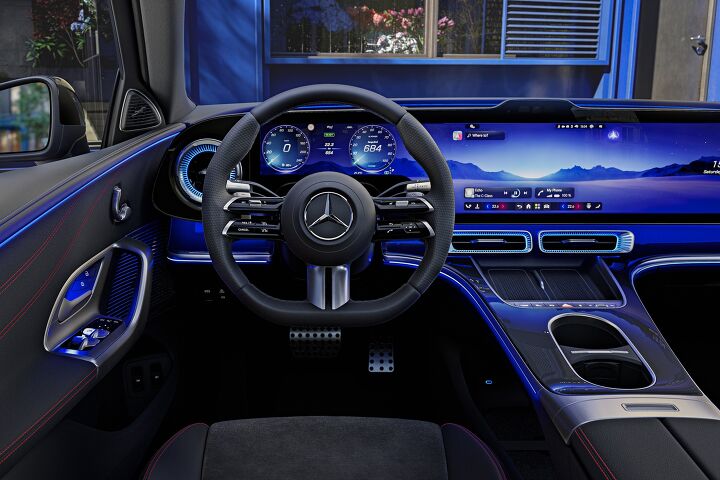
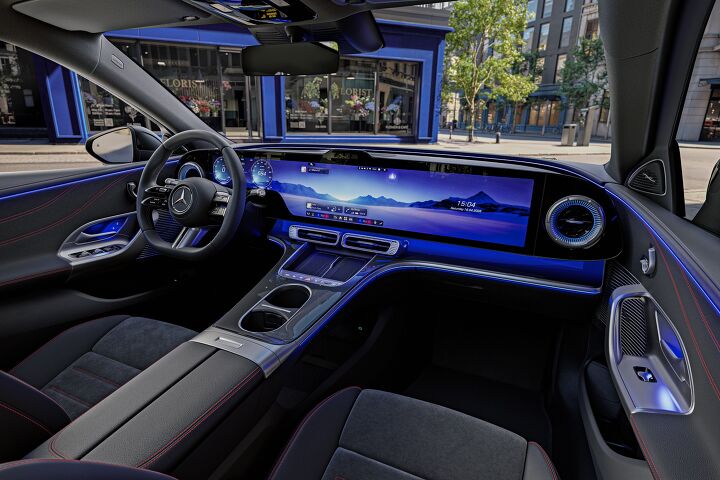
Mercedes-Benz has previewed the new interior for the C-Class, specifically the all-electric model, showcasing that the brand continues to move toward absolutely massive displays and touch controls.
Considering that Volkswagen recently attempted to do the opposite when it previewed the ID.3 Neo, the timing is interesting. There’s a surplus of evidence that mainstream buyers find screen-heavy interiors polarizing. But Mercedes-Benz looks to be betting that the same does not apply to those shopping for luxury brands.
“With the all-new electric C‑Class, we’ve raised everything customers love about this model to the next level. The result is a new benchmark for quality, craftsmanship and comfort. It is the most spacious and most intelligent C-Class ever,” Mercedes-Benz Chairman Ola Källenius stated as part of the release.
The company is stressing that the updated C-Class’ cabin will be more spacious, comfortable, and quieter than ever. But there’s nothing overtly subtle or relaxing about the standard MBUX Superscreen or optional MBUX Hyperscreen being shown off in advance of the new C-Class’ formal reveal.
In either case, the vehicle gets an interactive interior display that spans the entirety of the dashboard. But it’s the Hyperscreen that integrates everything into one seamless unit. At first blush, it's all very impressive.
Mercedes is promising 10 unique display schemes that work in tandem with ambient lighting that can be upgraded to encompass more of the cabin (including the doors). The car can also be fitted with the automaker’s trick panoramic Sky Control roof that can be electronically adjusted to be transparent or opaque whenever the driver wishes. It even comes with a plethora of illuminated Mercedes-Benz logos embedded into the glass.

Seats are said to be the best the automaker has ever made and can be upgraded to work with the Burmester 4D sound system in a way that lets you feel the sound (meaning they vibrate). Upholstery options include Nappa leather, AMG Line leather, or “vegan leather” that’s been approved by some goofy group called the Vegan Society. This just means it’s not real leather and just some amalgamation of plastic and plant matter that mimics how leather feels.
However, cabin materials and color varieties clearly weren’t what Mercedes-Benz was hoping to show off in the release — it’s that big old screen.
The company is promising a placid and comfortable interior offering a “welcome home” experience. But it’s difficult to say that serenity is best achieved by putting massive digital displays directly in front of passengers. These screens are arguably just a way to flex on people that didn’t spend the extra money to have the absolute biggest displays in town.
For the sake of transparency, it needs to be said that your author has grown slightly biased against luxury brands. Premium nameplates have always placed an added emphasis on glitzy, plush interiors and newer technologies. At one point, some even offered above-average dependability. But modern luxury vehicles are so heavily fixated on polarizing connectivity features and touch controls, that it’s honestly hard to objectively say that they offer a better experience than something from the mainstream.
While customers could always option out volume models to become more luxurious by spending extra money, high-end nameplates historically offered vastly superior cabin materials, premium audio systems, and upgraded powertrains. This was in addition to cutting-edge technologies that were sometimes reserved for the fanciest models.
That is still the case. But it has arguably become less true in recent years. While it’s still easier to obtain genuine leather seats from a brand like Mercedes, instead of the phony synthetic or “vegan leather” that’s now rampant throughout the industry, it’s one of the few physical differences still being emphasized between premium and pedestrian models. For luxury automakers, the core focus has largely moved from hardware to software.
We’ve seen premium brands downsizing engines just like everyone else and are likewise leveraging forced induction or electrification to help make up the difference. Meanwhile, advanced driver assistance systems (ADAS) are promoted as game changers — even though a lot of people don’t use them and testing has shown that their effectiveness varies significantly between brands, weather conditions, and even the time of day.
But the most visible difference can be conspicuously found by just peering inside the cabin. Luxury marquees are doing their utmost to make sure that they’ve implemented massive digital displays, with Mercedes-Benz being the obvious poster child for the trend. While the automaker does give customers a lot of leeway in terms of interior customization, some people still discuss the brand’s interiors as “rolling nightclubs.”
This undoubtedly appeals to a certain kind of customer and helps draw people in at the dealership. But it doesn’t really yield a better user experience in most cases and debatably dilutes the value proposition on what is already going to be a more expensive automobile.
Mercedes-Benz doesn’t even seem to be taking its own advice. Last year, the company’s head of design expressed concerns that Western customers didn’t view screens as luxurious in themselves. He also stressed that drivers (particularly enthusiasts) would prefer vehicles to feel like mechanical devices, rather than electronic ones.
“Screens are not luxury. You have a better — and bigger — TV at home, right? And every car has a big screen,” Mercedes-Benz design chief Gorden Wagener said at the time. “So we have to create luxury beyond the screen. That's why I talk about craftsmanship and sophistication. There's so much emphasis on making [Mercedes] vehicles better.”
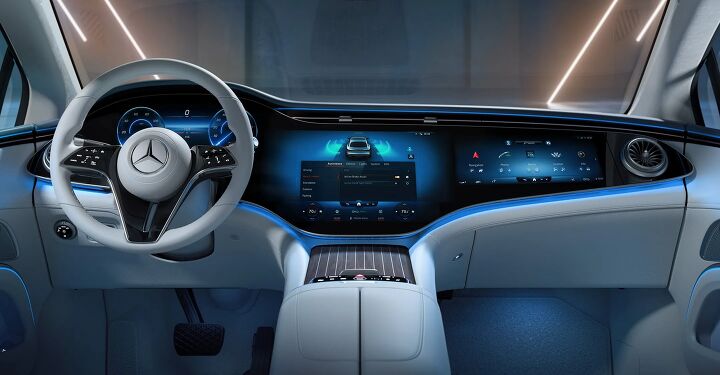
However, the automaker continues to push increasingly large displays — especially on electrified models that are already struggling to move off dealership lots. Mercedes has struggled badly with the EQS and it boasted one of the most expansive screens in the entire industry (pictured below) when it debuted.
Some of this can be explained by automakers wanting to sell vehicles in Central Asia, where massive screens are viewed as extremely desirable. Lacking a century of normalized automotive ownership, Chinese tastes differ from ours by a significant degree. They’re less worried about performance and more concerned with roomy cabins, a cushy ride and showy technology. They’re also more prone to buying all-electric vehicles than Western markets, which may likewise explain why brands tend to lead with the biggest screens on EVs.
While China has started to snub foreign brands to buy more domestic models, German automakers have made solid inroads with the Chinese market and would like to stay there. This is another reason why Mercedes-Benz has gone extra hard to compete with Chinese models likewise featuring dashboard-spanning screens. But you’ll also see this from American luxury brands and (to a lesser extent) the Japanese firms.
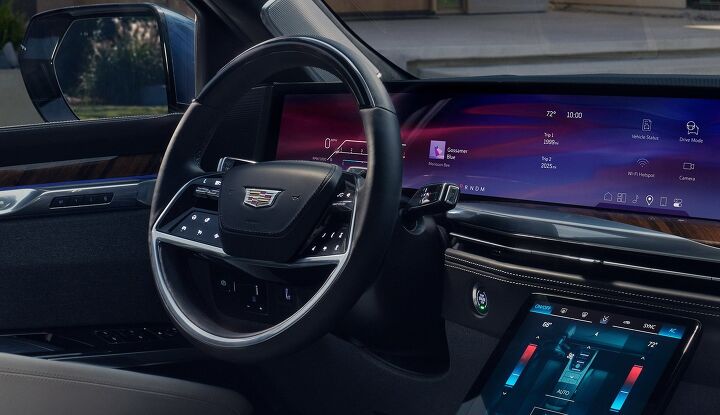
Compare the cabin of the Chevrolet Suburban against the Cadillac Escalade (pictured below). They’re technically the same vehicle at their core but the Caddy’s interior screens absolutely dwarf the Chevy’s already sizable displays.
Big screens also tend to be cheaper to implement than intelligently laid out dashboards featuring premium materials, analog instrumentation and physical buttons. Affordable cars have embraced “minimalist” cabins to save money and force customers into using connectivity features. Luxury brands have done the exact same thing, just with a more flashy and maximalist ethos.
We shall see how the new C-Class interior is received once both the gasoline and electric models have debuted in earnest. Since a lot of people purchase from Mercedes-Benz to dunk on the neighbors to begin with, these massive touchscreens may actually receive a warm reception. It looks like the company has retained at least a few essential buttons on the steering wheel and center console. It’s also plausible that Mercedes-Benz will offer some kind of optional AI assistant with voice command functionality that’s capable of handling most controls without drivers lifting a finger. While these systems often don’t work as well as advertised, they’ve continued to improve and Mercedes tends to be well above the industry average.
[Images: Mercedes-Benz; General Motors]
Become a TTAC insider. Get the latest news, features, TTAC takes, and everything else that gets to the truth about cars first by subscribing to our newsletter.
from TheTruthAboutCars https://ift.tt/gGbQMyX
via IFTTT
No comments