AMC Fights Back: History of the Gremlin & Hornet — Ep.3: The Last Independent Automaker
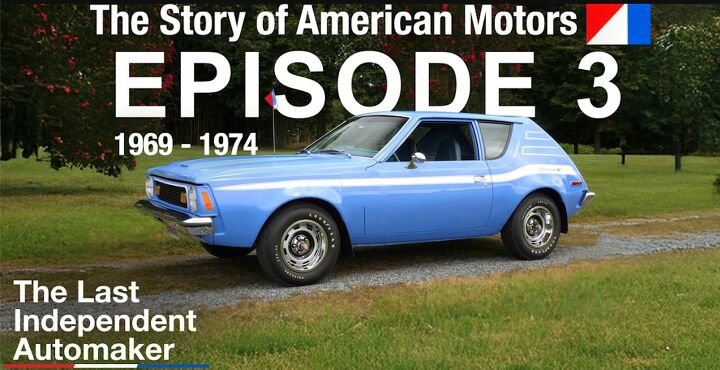
To fight the growing wave of imported cars, AMC launches a quirky new subcompact car: the Gremlin. And despite his colleague's protest, CEO Roy Chapin Jr. the Jeep Corp., bringing AMC to the 4WD market.
The Last Independent Automaker is a six-part documentary series, produced by Joe Ligo, Jimm Needle, and Patrick Foster. It details the dramatic rise and fall of American Motors Corporation, told through over 35 exclusive interviews, hundreds of rare photographs, and hours of historical and new automobile footage.
The TTAC Creators Series tells stories and amplifies creators from all corners of the car world, including culture, dealerships, collections, modified builds and more.
An AI-generated transcript edited by a human staffer is below.
[Image: YouTube Screenshot]
Become a TTAC insider. Get the latest news, features, TTAC takes, and everything else that gets to the truth about cars first by subscribing to our newsletter.
This transcript from Episode 3 of The Last Independent Automaker chronicles the rise, struggles, and innovation of American Motors Corp. during the late 1960s and early 1970s.
The documentary begins with AMC facing growing pressure from imported compact cars like the Volkswagen Beetle and Japanese automakers. In response, AMC executive Gerald Meyers and designer Richard “Dick” Teague conceived the quirky and affordable AMC Gremlin, sketched famously on an airplane sickness bag. Built using the existing AMC Hornet platform, the Gremlin became America’s first domestic subcompact and was developed at a fraction of competitors’ costs.
The transcript also details AMC’s acquisition of Jeep from Kaiser Jeep in 1969. Despite internal skepticism about Jeep’s outdated factories and inefficiency, AMC CEO Roy Chapin Jr. believed the brand had enormous potential. The acquisition proved pivotal, even as AMC endured labor strikes and financial strain. Chapin and company president William Lunberg are portrayed as complementary leaders who modernized AMC’s finances, marketing, and manufacturing culture.
A major theme is AMC’s identity as a creative underdog competing against Detroit’s “Big Three.” The company embraced innovation and cost-saving engineering, launching memorable vehicles and marketing campaigns. AMC introduced sporty models like the AMC Javelin and experimental projects like the AMC AMX3, while also targeting younger buyers with unique branding partnerships such as the Levi’s-themed Gremlin interiors.
The transcript also examines factory life in AMC plants, especially in Kenosha, Wisconsin. Workers describe physically exhausting assembly-line jobs, workplace camaraderie, union-management tensions, and widespread alcohol and drug problems that hurt quality control. AMC and the union eventually created one of the industry’s first joint substance-abuse recovery programs.
As environmental regulations, insurance costs, and the 1973 OPEC oil embargo reshaped the American auto market, AMC’s smaller, fuel-efficient cars suddenly became highly desirable. Models like the Gremlin and Hornet benefited from rising fuel prices while larger muscle cars faded from popularity. AMC’s reputation improved further with its “Buyer Protection Plan,” a straightforward warranty program emphasizing quality and customer trust.
The episode concludes with AMC enjoying record sales and newfound confidence by the mid-1970s. However, executives became increasingly ambitious, investing heavily in expansion and preparing a radical new vehicle: the AMC Pacer, setting the stage for the next chapter in the company’s history.
from TheTruthAboutCars https://ift.tt/F2jyp64
via IFTTT
No comments