Building the Ultimate Honda CR-V: K-Swap Gets Complicated
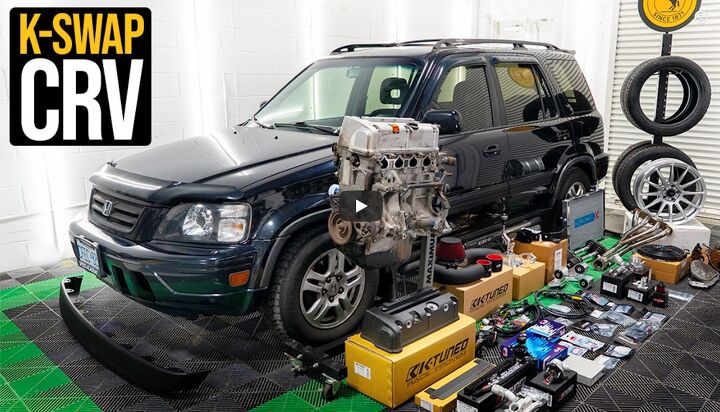
With the Honda K24a2 hanging in the engine bay, now it's time for everything else, starting with the cooling and fuel systems along with a custom exhaust system.
Speed Academy is a website and YouTube channel based on making things go fast and enjoying cars. Peter Tarach and Dave Pratte are the forces behind Speed Academy.
The TTAC Creators Series tells stories and amplifies creators from all corners of the car world, including culture, dealerships, collections, modified builds and more.
[Image: Speed Academy/YouTube Thumbnail]
Become a TTAC insider. Get the latest news, features, TTAC takes, and everything else that gets to the truth about cars first by subscribing to our newsletter.
This transcript follows a major engine-swap project on a high-mileage 2000 Honda CR-V. Instead of repairing the failed automatic transmission after 400,000 km, the builders decide to transform the CR-V with a more powerful modern drivetrain.
Core Build Overview
The project involves:
- Swapping in a 200-horsepower Acura TSX K-series engine
- Pairing it with a manual AWD 5-speed transmission from a newer CR-V
- Using swap components from Hasport and K-Tuned
The creators explain that physically mounting the engine was relatively easy, but making everything function properly as a reliable daily driver became highly complex.
Cooling System Challenges
A stock CR-V radiator would not fit because the hose locations interfered with the new engine accessories. They solve this by:
- Installing a K-swap radiator from Coyo Radiator
- Customizing brackets and fan placement
- Testing intake manifold fitment to maximize clearance
They compare two intake manifold options:
- RBB manifold for low/mid-range torque
- RBC manifold for better top-end power
The RBC manifold ultimately provides better clearance and becomes the preferred solution.
Custom Plumbing & Accessories
A large part of the episode focuses on adapting:
- Radiator hoses
- Heater hoses
- Intake routing
- Power steering lines
The builders use a mix of:
- K-Tuned components
- Custom AN fittings
- Vibrant Performance hoses
- Parts from their “stash” of leftover components
They also relocate and redesign the power steering plumbing because the K-series engine layout differs from the original B-series setup.
Manual Transmission Conversion
Since the CR-V started as an automatic:
- The team must install a clutch pedal
- Remove the column shifter
- Modify pedal assemblies
- Adapt a clutch master cylinder
- Install a K-swap shifter setup
The shifter installation requires:
- Tunnel cutting
- Fabrication
- Spacers
- Custom trim adjustments
In the end, they manage to create a setup that looks nearly OEM while maintaining good ergonomics.
Drivetrain & Exhaust Issues
The AWD layout creates several unexpected complications:
- The stock driveshaft is slightly short, but they determine it still has enough travel to work safely.
- Standard K-swap headers interfere with the AWD drivetrain.
- They resort to a stock TSX exhaust header for clearance reasons.
The exhaust system ultimately requires:
- Full custom fabrication
- Re-routing around the driveshaft
- A custom 3-inch exhaust system
- A high-flow catalytic converter to keep the vehicle emissions-friendly
The builders describe the exhaust fabrication as an all-day process involving heavy trial and error.
Overall Tone & Conclusion
The episode emphasizes:
- Problem-solving
- Fabrication work
- Trial-and-error engineering
- Making a modern drivetrain work in a 25-year-old platform
By the end:
- Major mechanical systems are installed
- The custom shifter and drivetrain are functioning
- The exhaust is completed
- The next phase will involve creating a custom air-conditioning setup for the K-swapped CR-V
The project is portrayed as an ambitious but rewarding transformation of an aging SUV into a more modern, engaging, manual AWD performance daily driver.
from TheTruthAboutCars https://ift.tt/gOXhl0y
via IFTTT
No comments