Error: 12V Power Supply — How to Replace and Code Your VW ID Battery
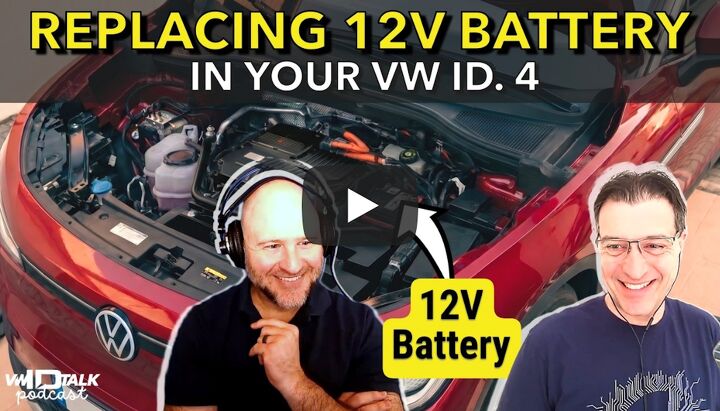
Your high-voltage traction battery is useless if your 12V lead-acid battery dies. In this episode, Jan and Wes walk you through the surprisingly complex process of replacing and coding a new 12V battery in a Volkswagen ID.4.
In this video, we cover:
- Why the 12V matters: How it operates the high-voltage contactors and vehicle electronics.
- Hardware Walkthrough: Removing the strut bar and locating the battery.
- The De-energizing Procedure: A critical safety step that differs from gas cars.
- EFB vs. AGM: Why we upgraded to an H4 AGM and why you must select "Fleece" in the settings.
- Software Coding: Using OBDeleven or VCDS to update Module 19 and adapt the steering/windows.
Tools Mentioned: 10mm & 14mm sockets, Torque wrench (20 Nm and 5 Nm specs), OBDeleven/VCDS Diagnostics.
Check out the VWIDTalk Podcast on YouTube and wherever you get your podcasts ( Apple Podcasts, Spotify, Overdrive and more).
A transcript, summarized by AI and edited by a staffer, is below.
The TTAC Creators Series tells stories and amplifies creators from all corners of the car world, including culture, dealerships, collections, modified builds and more.
[Image: YouTube Screenshot]
Become a TTAC insider. Get the latest news, features, TTAC takes, and everything else that gets to the truth about cars first by subscribing to our newsletter.
This podcast episode from the VWIDTalk channel explains the importance of the 12-volt battery in electric vehicles, particularly the Volkswagen ID.4, and provides a detailed walkthrough for replacing and coding a new battery.
The hosts explain that despite EVs having large high-voltage battery packs, the 12-volt battery remains critical because it powers essential systems like door locks, electronics, displays, and the contactors that activate the high-voltage battery. Without 12-volt power, the car cannot start or even unlock electronically.
Key discussion points include:
- Why the 12-volt battery matters in EVs
- The high-voltage battery stays disconnected until the 12-volt system powers the contactors.
- EV electronics continuously cycle the 12-volt battery through charging and discharging via the DC-DC converter.
- Battery types and upgrades
- Older ID.4 models shipped with standard flooded lead-acid (SLI) batteries.
- Volkswagen later upgraded many vehicles to EFB/EFB+ batteries.
- AGM batteries are presented as a more durable upgrade option with different charging requirements.
- Symptoms of a failing battery
- Warning lights and “12 Volt power supply” service messages.
- Persistent low-voltage warnings even after charging usually indicate battery failure.
- DIY replacement walkthrough
- The battery is located in the front compartment near the firewall.
- Replacing it requires removing the strut bar and trim pieces.
- The car must be safely de-energized by disconnecting the negative terminal and ensuring the vehicle powers down completely.
- Careful handling of battery sensors and connectors is emphasized.
- Installation process
- Remove the hold-down clamp and slide the battery forward before lifting it out.
- Install the new battery, torque bolts correctly, reconnect terminals in the proper order, and reinstall trim before the strut bar.
- Post-installation steps
- The dashboard will temporarily display many warning lights (“Christmas tree” effect).
- Steering wheel and window systems may need recalibration after power restoration.
- Critical coding/configuration step
- The vehicle’s control module must be updated with the new battery’s serial number, chemistry type, and capacity using tools like OBDeleven or VCDS.
- AGM batteries must be coded as “fleece” batteries because of Volkswagen’s terminology.
- Correct coding ensures the proper charging curve and prevents battery damage.
The episode concludes by stressing patience, double-checking connections, and verifying coding settings. The hosts encourage owners comfortable with tools and software coding to attempt the replacement themselves, while acknowledging that dealer service may still be preferable for some drivers.
from TheTruthAboutCars https://ift.tt/yg7hXvu
via IFTTT
No comments