Inductive Roadway Charging Isn’t Remotely Realistic
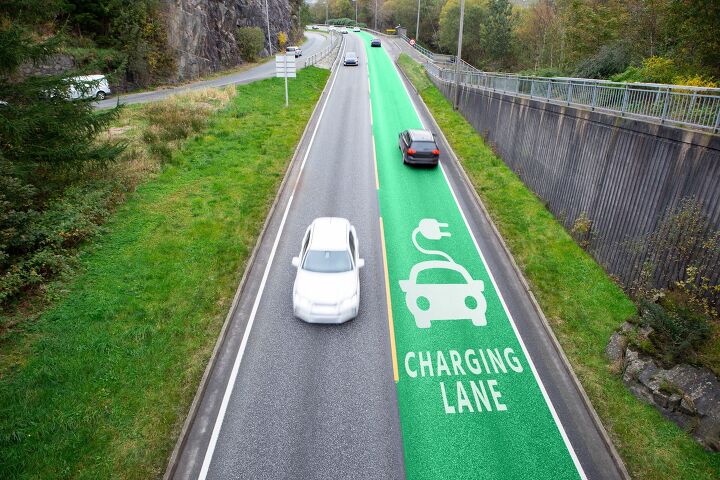
Several regions of the United States have taken it upon themselves to try and implement inductive roadway charging for all-electric vehicles. The theory is that EVs would be able to recharge while driving down the road, rather than needing to make extended stops to plug in during their journey. While testing has proven that it’s certainly possible, widespread implementation still seems wildly unrealistic.
Thus far, several states have tested inductive charging. This includes Michigan, Indiana, and Utah. Florida anticipates being next with a plan to include a section of inductive charging on its new $500 million, 4.4-mile highway. Construction is expected to end in 2029, with about 0.75 miles being able to help recharge EVs featuring special equipment.
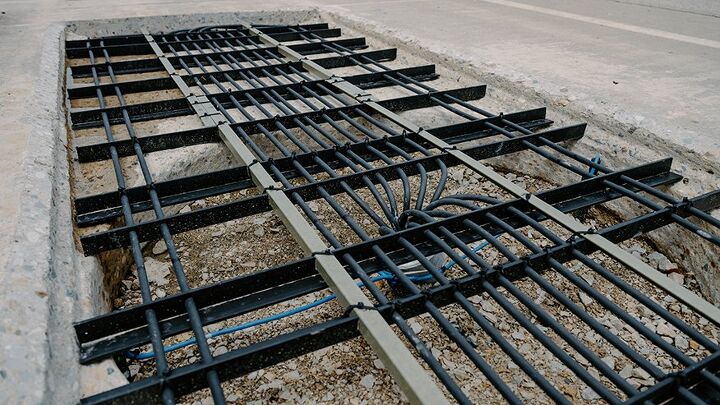
Typically, the roads require crews to mill out channels that can have coils or matrices (likely made of copper) buried beneath the road's surface. Those will then be connected to an adjacent network of conduits and inverters that tap into the broader electrical grid. The coils output energy via an electromagnetic field and the vehicles can use this to recoup their dwindling state of charge.
It’s the same basic premise as the inductive charging used by your smart phone, just scaled to the largest level imaginable up and with the device in motion.
The sales pitch for inductive roadways tends to revolve around addressing range anxiety. Despite EV ranges and charging times having improved over the years, owners are still required to sit around and wait when it inevitably comes time to recharge them. Extending range has resulted in heavier automobiles, featuring larger battery packs that can drive up MSRPs.
With the help of widespread inductive charging, the assumption is that these vehicles can simply take on energy while en route to their destination — dramatically reducing the need for plug-in charging while also allowing manufacturers to shrink the size of batteries.
However, the cost-benefit analysis for customers certainly wouldn’t make sense until inductive charging was available basically everywhere and every EV featured the necessary hardware required to utilize the system. At present, most automakers estimate the feature could add roughly $9,000 to the total cost of the average vehicle.
Sadly, optioning the relevant equipment will probably be the most affordable component of widespread inductive charging.
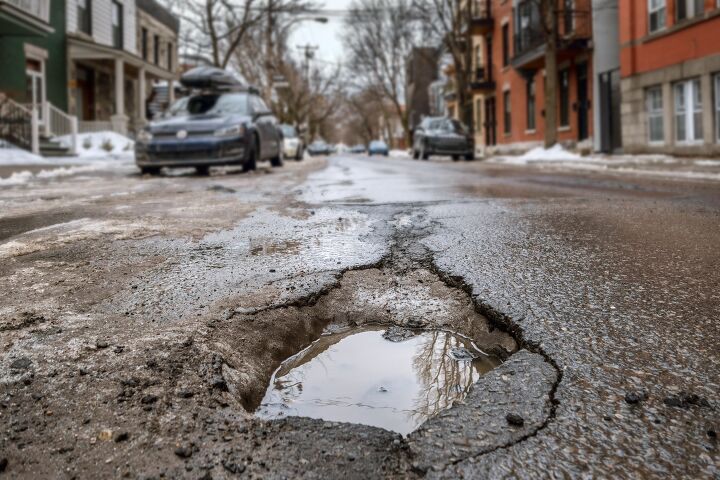
While I cannot speak to the condition of the roads everywhere in America, most of the places I’ve driven over the last few years seem to be in rougher shape than ever before. Southern states tend to have more pristine driving surfaces due to avoiding the annual freeze-thaw cycle that absolutely eats up pavement. But most studies have suggested that American roadways are in worse condition than they used to be, with almost 10 percent now being rated as poor.
Concrete figures are difficult to obtain at the federal level. The U.S. Department of Transportation estimated that upward of 17 percent of all Federal-aid highway pavements could be rated as being in poor condition in 2014, which it noted was an increase from a decade prior. However, reporting has gotten rather lax in recent years and the metrics for determining what constitutes roadway conditions has gotten a little wonky.
These days, the DOT appears to be rather generous in terms of what it considers roads in "poor" condition. But we can see that the national percentage of highways and even interstates (which tend to be the best maintained) deemed to be in "good" shape has still declined.
Maintenance needs have increased dramatically due to vehicles getting significantly heavier over the last fifteen years. This is the result of automakers pivoting to larger models and attempting to prioritize EVs. Localized deliveries have also increased dramatically due to services like Amazon seeing increased use.
However, governments have not broadly prioritized roadwork to account for this. At the federal level, the best example of this was probably the $1.2-trillion Infrastructure Investment and Jobs Act (IIJA) passed during the Biden administration. While the spending package was absolutely massive, a significant portion of the whole went toward broadband services, advancing electric vehicles, and various environmental initiatives. None of these items address the core issue of America’s aging transportation infrastructure, nor the influx of heavier vehicles that are helping to wear it down more quickly.
Meanwhile, local municipalities are trying to accommodate increasingly strict safety and certification requirements. Much of the funding they did receive via the IIJA was also allocated specifically for special projects and low-income areas. This seems like a great idea on the surface, until you realize that a good share of those places have become depopulated and need much more than just their potholes filled.
With the above in mind, any roads featuring inductive charging would need an almost unfathomable amount of maintenance and likely take away from work that desperately needs to be done elsewhere.
Anyone who uses inductive charging on their phone knows that it needs to be situated just right to work properly. Now imagine that same concept scaled up to a vehicle that’s cruising down a road that has embedded copper coils. Any imperfections or degradation would effectively make that stretch of pavement’s charging capabilities totally useless.
However, inductive charging is inherently less efficient than simply plugging something into the grid directly. The necessary wattage has to be pushed through a physical gap to accomplish anything and that gap is going to be extremely large. For automobiles, we’d have the pavement itself and several inches of air occupying the space between charging points.
On average, inductive charging requires anywhere between 10 percent to 50 percent more electricity to charge a device — and that’s on electronics that are optimized for the feature. Automobiles would undoubtedly be on the higher end of the spectrum, increasing regional energy costs wherever inductive roadway charging was implemented while effectively wasting unfathomable amounts of electricity.
This doesn’t take into account rain or snow, which probably wouldn’t prove to be much of an impediment until roads degrade to a point where coils are exposed. But, once that does become an issue, it’ll be an incredibly serious problem without preventative maintenance. At best, a single misaligned coil would dramatically reduce efficiency. At worst, an exposed wire would become dangerous and could knock out large segments of the charging network when damaged.
Thus far, it feels like we’ve already made a pretty sound case against inductive charging. It wastes electricity, nullifying any would-be environmental claims, and requires more maintenance than the nation presently seems capable of providing. But there is one other factor that will probably keep the concept from taking off.
The upfront cost of actually building these roads would be astronomical.
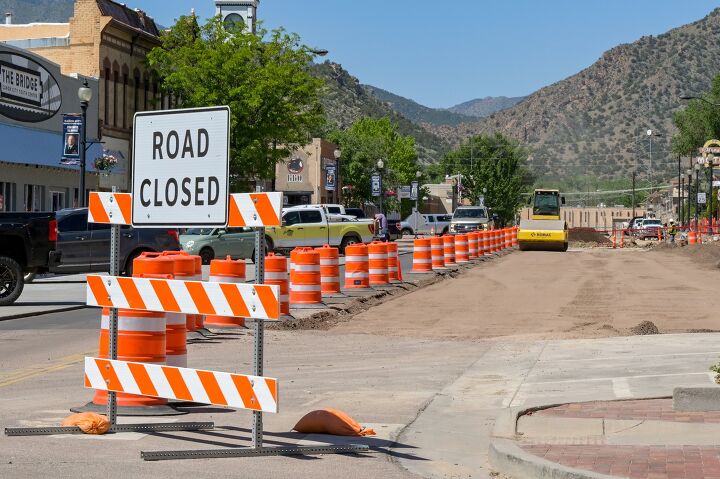
Conservative estimates typically have inductive roadway charging costing roughly $5 million (USD) per mile. But others have floated figures north of $30 million per mile. The final sum would depend heavily on where and what kind of road is being built (e.g. single-lane highway vs multi-lane expressway). This is significantly higher than traditional roads, which would typically range between $1.5 million and $8 million per mile.
In case you were wondering, this doesn’t take into account maintenance projections.
Granted, these are early estimates with only a few physical examples to point to. For example, the Michigan Department of Transportation (MDOT) partnered with a private company (Electreon) to build a mile-long stretch of road in Detroit (below) to test inductive charging and that project was estimated to cost about $6 million.
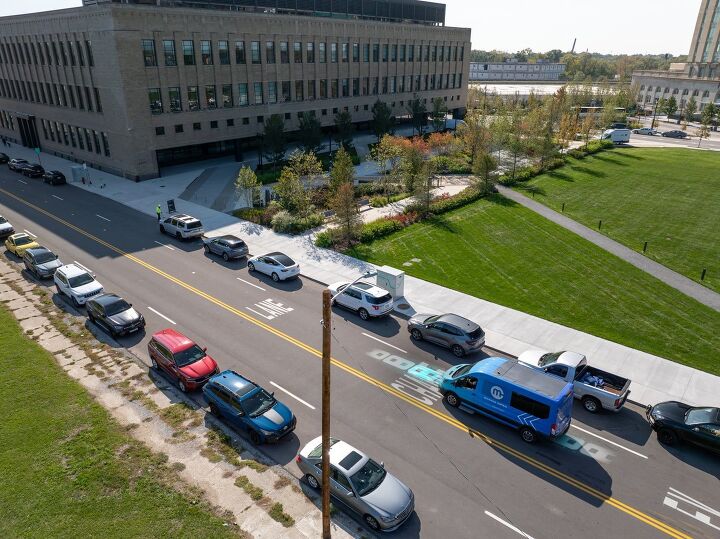
Since then, MDOT has suggested adding inductive charging to other roads in a bid to help reduce range anxiety. Governor Gretchen Whitmer has likewise been adamant that Michigan should lead the way with inductive charging, suggesting that it could even develop a 1,100-mile drivable coastal route that would allegedly encourage EV tourism.
The Indiana Department of Transportation (INDOT) and Purdue University likewise managed to build a quarter mile of road to prove that large commercial vehicles could be charged on the highway. The concept worked, proving that the modified trucks could indeed take on energy at speeds up to 65 mph. But the program cost an estimated $11 million.
While the basic concept of inductive EV charging is sound, implementation will be the big obstacle. Burying trillions of dollars worth of copper coils into roads seems like a big ask when maintenance crews can barely keep up with seasonal potholes and electric vehicles aren’t even outfitted with the necessary hardware to take advantage.
It also seems like a rather silly plan when the efficiency losses could result in 50 percent of the electricity being wasted. Energy costs were high enough before we had to start taking the recent push to build data centers and recent fuel shortages. Considering that the biggest advocates for the scheme are frequently self-proclaimed environmentalists, it’s odd that they would not take all of this into account. We’re also in a situation where electric vehicles have not seen the kind of EV adoption rates automakers and Western governments had anticipated — limiting the need for such roads.
Frankly, all-electric vehicles seem like they’d be better served by simply having more public charging stations built in remote areas. While the industry never wants to admit this, there are still large portions of the country where the charging network makes EV travel downright troublesome. Massive government grants to the relevant companies were supposed to have addressed this. But we’ve found that staggeringly little progress has been made over the last several years, with some accusing the scheme of being little more than a handout to corrupt energy companies.
There are also some lingering concerns about the potential health risks of having the roads people drive on constantly emitting electromagnetic fields (EMF). The present medical consensus is that prolonged exposure to EMF can increase stress levels, fatigue, headaches, mental confusion, and create difficulties with sleeping. Many, including the American Cancer Society, have noticed that areas with high concentrations of EMF likewise tend to see significantly higher per capita cancer diagnoses. However, the National Cancer Institute and World Health Organization (WHO) have stated that they do not have any conclusive data that EMF exposure can actually cause cancer.
Inductive roadway charging is undoubtedly an interesting concept and it would be easy to get on board with if there was an affordable way to implement the plan. The notion of having EVs recoup lost energy en route would open up all kinds of new doors for the industry. Hybrids with small batteries could massively offset how much fuel they consume while pure EVs could extend their feasible ranges.
But the financial burden looks gruesome and the amount of energy that would be wasted seems wholly at odds with what we’re told EVs are allegedly supposed to accomplish. Considering the average speed of the vehicles involved, routes using inductive charging would likewise need dozens of miles of uninterrupted electrified pavement for drivers to see any real benefits.
We don’t even know what widespread implementation would look like. Who ultimately pays for the construction of, and electricity running through, these inductive segments? Fuel (and other) taxes already pay for the brunt of the road work you see and many are annoyed that EVs are already circumventing “paying for public roads.” Nobody with a gasoline-powered automobile is going to want more money going toward inefficient inductive charging. The assumption is that connected vehicles would use some sort of auto payment system in a manner similar to modern toll roads. But the initial push would be wholly funded by taxpayers, most of whom would have nothing to gain from the change.
[Images: Scharfsinn/Shutterstock; Purdue University/Kelsey Lefever; Marc Bruxelle/Shutterstock; Electreon; Ceri Breeze/Shutterstock]
Become a TTAC insider. Get the latest news, features, TTAC takes, and everything else that gets to the truth about cars first by subscribing to our newsletter.
from TheTruthAboutCars https://ift.tt/p6J2hOU
via IFTTT
No comments