What Are Dealerships Going to Do as Sales Decline?

With new vehicle volumes poised to decline through 2026, dealerships are understandably concerned about the future. Sales are estimated to retract by 2.5 percent (year-over-year) in the United States while leases could drop by as much as 3 percent. Canada is poised to have it even worse, with sales declining by as much as 4.7 percent. However, retailers still have an ace up their sleeve by way of their service departments.
We’ve covered why new vehicle sales are starting to become an issue for the industry. It’s a combination of extravagant vehicle pricing, rising consumer debt, generalized inflation, and the average household simply having less disposable income than before. Then there is the fact that there is a subset of customers who simply don’t like the way modern vehicles are designed. With so many contributing factors, there doesn’t seem to be any way of avoiding market shrinkage.
However, the industry seems to have accounted for this to an extent. With drivers keeping their vehicles longer than ever, we’ve seen increased demand for maintenance and repairs. You’ve probably noticed that your mechanic has raised their prices and become swamped with work or that several of your friends have gone out to buy a set of wrenches — hoping that they can handle some of the easier tasks themselves.
Dealerships have similarly become increasingly reliant upon their service centers. While the figures tend to vary between locations, it’s not uncommon for the service and parts department to account for a majority of a business’ gross profit. This is good for the showroom because it helps keep the lights on, even during economic periods where would-be carbuyers are few and far between.
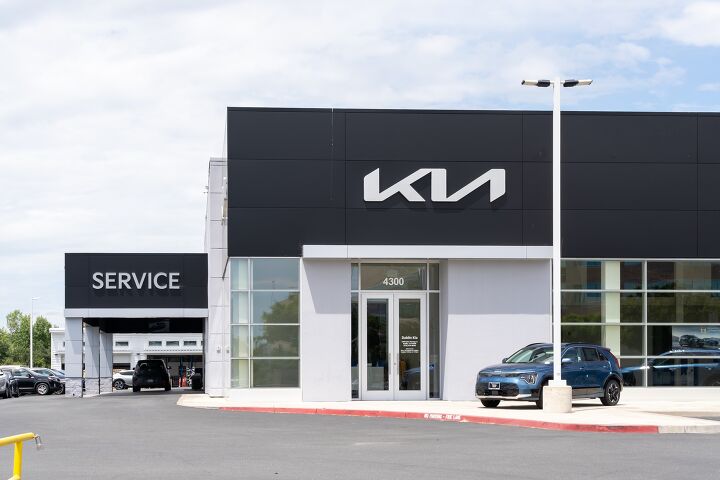
Something like 50 percent of the whole would be on the lower end of the spectrum, with most estimates being significantly higher. Rick Wegley, an instructor and consultant at NCM Associates of Kansas City, Missouri, previously told Automotive News that service can generate as much as 85 percent to 90 percent of revenue for a majority of dealerships. But this was tied to fears that the potential for growth had plateaued, with a focus on what the industry could do to change that.
While it’s honestly hard to imagine a scenario where the curve wouldn’t have flattened out at those rates, Cox Automotive previously issued a study suggesting that the growth has persisted. In April, the outlet reported that average dealer service and parts revenue had reached $9.23 million last year. That was said to be a 33-percent increase over the last eight years, even as the number of service visits had declined slightly over the same period.
The amount of work being done doesn’t seem to have come up in frequency, despite the general presumption that newer models do not boast superior reliability. Surveys have suggested that many customers (likely between 50 percent to 70 percent) are delaying work whenever possible due to a tightening household budgets. People just don’t have the kind of money necessary to afford the work, hence the shift to there being more DIY mechanics.
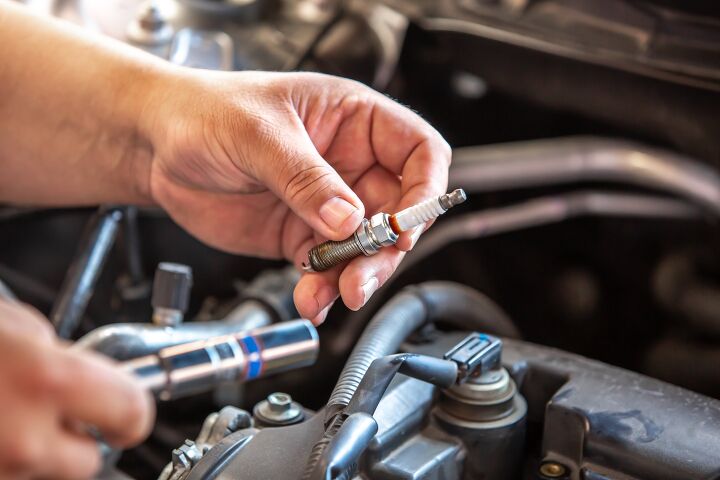
Ironically, this has also resulted in the average service bill becoming significantly higher. Postponing small, preventative maintenance often means spending more on a bigger job later. But the issue has been made worse by several years of accelerated inflation and changes in how newer vehicles are designed. Increasingly elaborate software and added sensing equipment often requires specific diagnostic equipment in addition to specialized calibrations. Independent mechanics frequently need access to these tools, which they have to either purchase or lease from automakers until third-party solutions can be developed.
This isn’t a coincidence, automakers are well aware that this gives branded service centers an edge over your neighborhood mechanic. It likewise helps discourage DIY repairs, which are assumed to have increased by 30 percent as household finances became significantly tighter after 2020.
Mobile repairs have also seen a rise in popularity. There are now numerous companies with a fleet of roving mechanics that will come to your driveway to put in some wrench time. Eager to prevent competition, automakers have started to encourage dealerships to offer this as an option. While this originated as a way to help companies operating corporate fleets stick with a given brand, manufacturers have been leaning on dealerships to offer the same treatment to retail customers.
Ford has arguably been leading the charge on this front. But General Motors and Stellantis have started to follow suit. Several EV brands (namely Tesla) have likewise embraced field repairs.
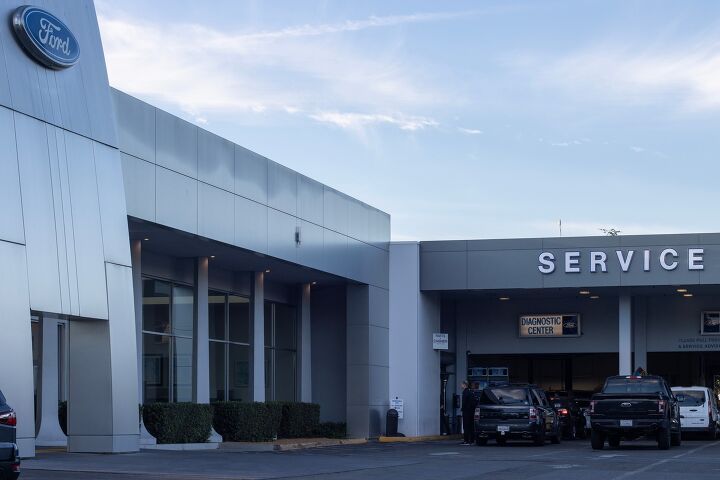
All of the above factors could be make or break for a dealership enduring an exceptionally lean sales period. But the other component is balancing operations with income. Like everything else, the cost of running a dealership has gone up in recent years and the recommendation from industry consultants has been for sites to update their service centers.
Automakers are singing the same tune. They want dealers to improve customer retention (which has declined by an estimated 12 percent as they flee to independent mechanics) and are recommending doing whatever it takes to get them back into service bays.
The rationale behind this should be pretty obvious. More people coming in for work means more opportunities to sell them on a new vehicle. But vehicle repair bills have also dramatically outpaced inflation, increasing by as much as 40 percent-60 percent since 2020. Demand for work has ballooned and multidisciplinary mechanics are in short supply, especially since many now need access to specialized diagnostic equipment required for some newer models — so there is likewise an opportunity to make more money on the work itself.
This is something that probably won’t get better for customers anytime soon. Independent mechanics are overwhelmed with work and struggling to keep pace with the industry’s technological gatekeeping, whereas dealer technicians are likewise in short enough supply to demand higher compensation.
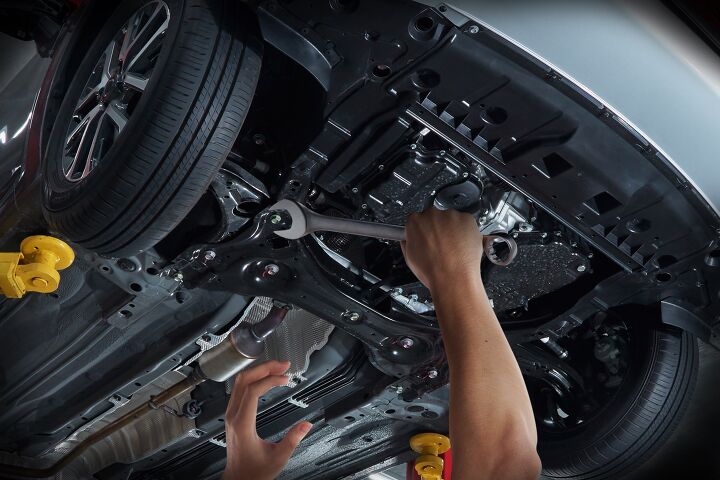
The traditional solution for drivers would normally be to crack open the service manual and try to do the maximum amount of routine maintenance at home. However, newer designs make this increasingly difficult and there’s only so long older models can hold on without adequate parts support. Until the industry decides to pivot back toward simple and more easily serviceable vehicles, customers will presumably become increasingly dependent upon technicians.
The silver lining is that basically all auto brands have shown a renewed interest in providing OEM parts for older models. Toyota and Honda both offer an extensive parts catalog for high-volume models, even if they happen to be a couple of decades old. General Motors likewise offers parts via ACDelco and German luxury brands have always been strangely good at retaining parts availability, despite asking for higher prices. This makes it a little more feasible to keep truly ancient models roadworthy.
The industry sees this as another way to boost profits as people hang onto vehicles for longer. But many drivers will see this as a boon in terms of keeping their paid-off vehicle around for a few extra years. Still, the trajectory for the average motorist will still be spending more money on repairs and the typical dealership will be trying to send more business to the service department to keep themselves in the black.
[Images: Virrage Images/Shutterstock; JHVEPhoto/Shutterstock; CatwalkPhotos/Shutterstock; Tada Images/Shutterstock; kannadhee/Shutterstock]
Become a TTAC insider. Get the latest news, features, TTAC takes, and everything else that gets to the truth about cars first by subscribing to our newsletter.
from TheTruthAboutCars https://ift.tt/sIyMGbc
via IFTTT
No comments