NHTSA Plans on Removing Brake Pedals

The National Highway Traffic Safety Administration (NHTSA) is officially planning to update the United States’ Federal Motor Vehicle Safety Standards (FMVSS) so that select vehicles will no longer require brake pedals. This is part of the Transportation Department’s most recent effort to help deregulate automobiles in a way that could benefit autonomous vehicles.
Frankly, the federal government has been extremely accommodating ever since the industry first started testing self-driving cars. Most of the early guidance for autonomous vehicles was pretty open ended, with only the FMVSS requirements standing in the way of what could be used on public roads. However, the industry has been pressuring regulators to ease up so they can produce more AVs without human controls.
Officially, the government wants to modify FMVSS No. 135 — which pertains to the braking systems equipped to light vehicles.
“We are at the cusp of the greatest technological revolution in vehicle technology since the innovation of the Model T,” stated NHTSA Administrator Jonathan Morrison. “If we want America to lead the way, we have to reimagine our regulatory framework. That’s why under Secretary Sean Duffy’s AV Framework, NHTSA is tearing down pointless barriers to innovative designs while strengthening the fundamental safety requirements that matter and holding AV developers accountable for safe performance. This approach will ultimately reduce roadway crashes, prevent fatalities, and increase mobility.”
This has been the corporate line for well over a decade now. The claim is that pivoting the world to self-driving vehicles will ultimately save countless lives. However, much like the claim that electric vehicle ownership would somehow save the environment, the public remains unconvinced.
In fact, protesting self-driving test vehicles has become increasingly popular in regions where some of these companies have been operating on public roads. Drivers have likewise been criticizing new regulations that would require driver-monitoring systems on all new models built after this year.
The argument is that government actors are giving tech companies leeway to do whatever they want, as they make moves to surveil drivers while likewise mandating other obnoxious safety features that may be far less effective than advertised.
In its announcement, NHTSA even promoted its latest scheme as an “effort to safely unleash American innovation and rethink the types of equipment — like windshield wipers or a rearview mirror — vehicles don’t need if a human being will never drive the car.” These are all things the Department of Transportation (DOT) is looking at further down the road. For now, it’s focused on changing FMVSS No. 135 to include several changes.
From the NHTSA:
Removes requirements for hand- or foot-operated brake controls for vehicles designed never to be operated by a human. Existing rules still apply to AVs that retain manual controls.
All subject vehicles must still meet the same stopping distance performance criteria via alternative testing procedures.
While this update ensures AVs can physically stop when commanded, NHTSA is separately developing safety performance requirements for AVs in real-world driving scenarios.
NHTSA will continue to use its broad defect enforcement authority to investigate unsafe ADS behavior and oversee recalls.
Eventually, agency officials suggested that they would likewise need to address the elimination of additional controls they believe will be made redundant by taking human drivers out of the equation. But the fact remains that NHTSA seems overjoyed to cater regulations to companies fielding experimental, driverless vehicles — even though it would never entertain modifying FMVSS to help make human-controlled automobiles more privacy-focused or cheaper to manufacture.
The proposed changes also make one wonder what someone is supposed to do in a runaway EV. Granted, these vehicles are supposed to have backup safety systems that prevent such tragedies. But we’ve seen rare instances of drive-by-wire passenger vehicles having electrical problems that tampered with braking and know that commercial grade automatic emergency braking systems have some shortcomings.
Some are bound to argue that it’s at least somewhat irresponsible to eliminate what effectively amounts to a passenger’s last line of defense. Although, retaining the pedal may just offer peace of mind rather than any tangible safety advantages. It’s not terribly realistic to assume that a person would even have time to climb into the driver seat and apply the brake manually in the typical crash scenario.
Criticisms likely exist more as a matter of principle, as regulators seem increasingly willing to expand the amount of freedom issued to corporations while reducing it for millions of people that drive themselves.
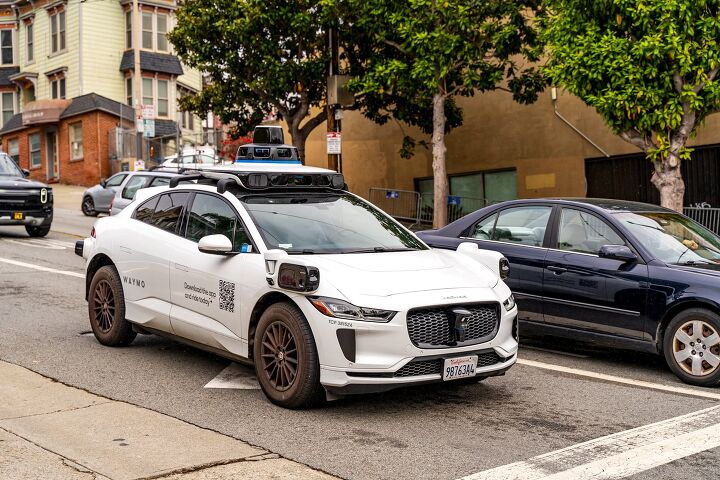
[Images: fongbeerredhot/Shutterstock; Iv-olga/Shutterstock]
Become a TTAC insider. Get the latest news, features, TTAC takes, and everything else that gets to the truth about cars first by subscribing to our newsletter.
from TheTruthAboutCars https://ift.tt/DHQP4L3
via IFTTT
No comments