San Francisco Is Fed Up With Autonomous Cars Causing Gridlock
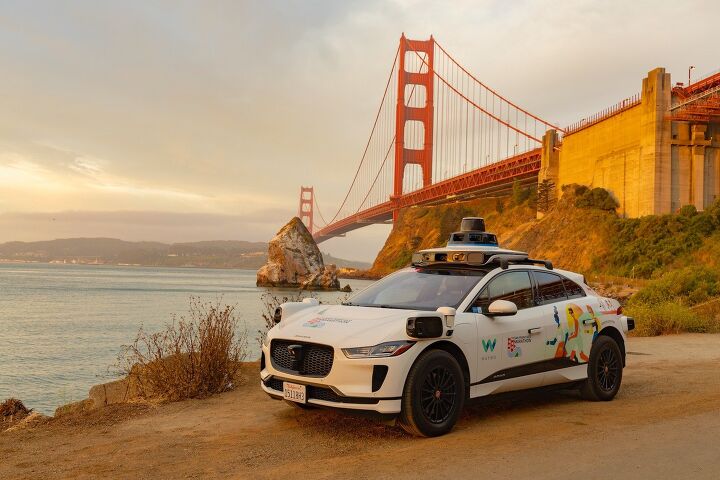
Even the most progressive politicians have a breaking point. For San Francisco Mayor Daniel Lurie, that point was provided by brain-dead robotaxis turning the Fourth of July holiday weekend into a total traffic nightmare.
Lurie, who famously pushed for San Francisco to become a ground zero for emerging vehicle technologies, is changing his tune. The mayor has officially sent a formal letter to the California Department of Transportation demanding a significant overhaul of the state's autonomous vehicle regulatory framework.
The pivot comes directly in the wake of a massive Fourth of July traffic meltdown on the city’s northern waterfront that left thousands of humans completely stranded.
The city's fireworks display over the Golden Gate Bridge drew more than 100,000 spectators. As the inevitable gridlock set in following the show, dozens of Waymo autonomous vehicles became utterly bewildered by the surging traffic volumes and heavy pedestrian foot traffic.
Instead of routing away or safely pulling over, more than 30 driverless vehicles froze in active travel lanes and parking zones. Exacerbating the calamity, several of the idling robotaxis completely exhausted their battery reserves while stuck, which then trapped municipal buses. Because of the multi-layered gridlock, even getting tow trucks to the scene of the blockage proved nearly impossible, with some vehicle recoveries stretching past three hours.

Lurie's letter—first reported by the San Francisco Chronicle—also called back to another major failure from last December, when a power outage knocked out traffic lights across a third of the city. It caused dozens of driverless cars to freeze inside active intersections, paralyzing the city's grid and emergency first responders.
"California’s current regulatory framework does not adequately address how autonomous vehicles operate during major incidents, planned or not," Lurie wrote. "California’s challenge now is not just whether autonomous vehicles can operate safely under normal conditions, but also whether they can perform reliably during extraordinary ones."
Lurie wants state regulators to move away from accepting "voluntary cooperation" from AV companies. He wants California to codify four core operational standards that every provider must legally demonstrate before being allowed on public roads:
- Immediate Physical Relocation: Manufacturers must prove an absolute operational capability to immediately remove or relocate immobilized robotaxis out of active travel lanes to keep traffic flowing.
- Real-Time Route Adaptation: Fleet systems must dynamically adapt to real-time anomalies by instantly altering routes, shrinking service boundaries, and shifting pickup/drop-off locations away from high-congestion event epicenters.
- Live Operational Telemetry Sharing: Companies must establish a direct data pipeline with local emergency and municipal agencies, providing transparent, real-time tracking of fleet service disruptions, disabled vehicle locations, and active recovery missions.
- Stress-Test Validation: Operators must validate through rigorous, certified testing that their artificial intelligence stacks can successfully process massive, erratic influxes of pedestrians and vehicle traffic without freezing.
California's two-tiered permitting process managed by the DMV and the Public Utilities Commission (CPUC) is already stricter than the wild-west frameworks of Texas and Arizona, but it completely strips municipal governments of the power to police their own streets.

In a closed-door meeting with the National Highway Traffic Safety Administration (NHTSA) earlier this year, first responders from San Francisco had nothing nice to say about the robotaxi service. According to an audio recording of the session obtained by WIRED, police, firefighters, and emergency officials alleged that Waymo’s autonomous vehicles are getting in the way when seconds matter.
San Francisco’s Department of Emergency Management has claimed the robotaxis have regressed. Executive Director Mary Ellen Carroll told regulators the vehicles are “ committing more traffic violations” and, in some cases, behaving worse than they had in earlier deployments.
Even dealing with the “human element” behind autonomous ride hailing—the remote support teams—has become a chokepoint. In one case cited by San Francisco emergency officials, a 911 operator reportedly waited 53 minutes on hold trying to reach Waymo support during an incident.
California’s Department of Motor Vehicles has introduced new rules, which came into effect this month, that require autonomous vehicle companies to respond to first-responder requests within 30 seconds. The rules also allow emergency officials to designate temporary “no-go” zones, requiring autonomous vehicles to clear the area within two minutes.
It’s a start, but it also points to a technology that still struggles when it has to interact with the human experience.
Become a TTAC insider. Get the latest news, features, TTAC takes, and everything else that gets to the truth about cars first by subscribing to our newsletter.
from TheTruthAboutCars https://ift.tt/nsjfo1J
via IFTTT
No comments