Swedes Prove Modern Cars Are More Distracting Than Ever
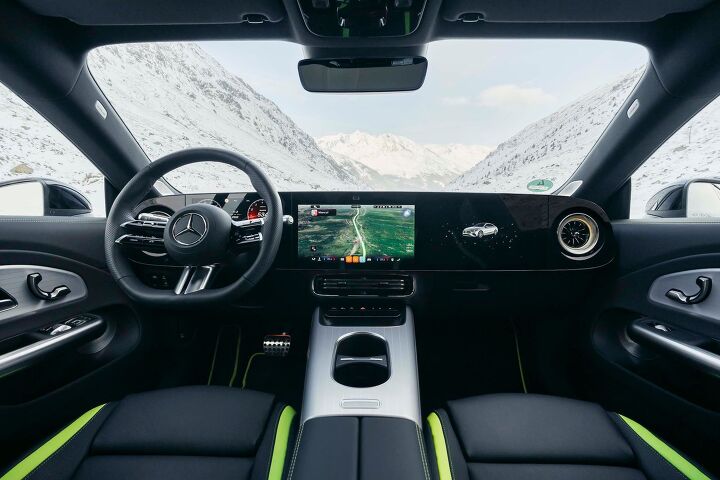
Studies have suggested that modern vehicle interfaces are significantly more cumbersome to use than their now-vintage counterparts. Sadly, recent testing out of Sweden has shown that things have only gotten worse over the last few years.
Considering how long touchscreens have been in automobiles, one might assume that automakers have generally gotten better at making them safer to operate. However, that doesn’t appear to be the case. Based on research conducted by Sweden’s largest and oldest automotive magazine, Vi Bilägare, modern infotainment systems appear to be more distracting than ever in 2026.
The outlet described its findings as “worrying.”
Testing consisted of taking 10 brand-new cars (and a couple of older models) to the Lunda Airfield in Uppsala, Sweden, and subjecting them to a series of tasks while being driven at 68 mph.
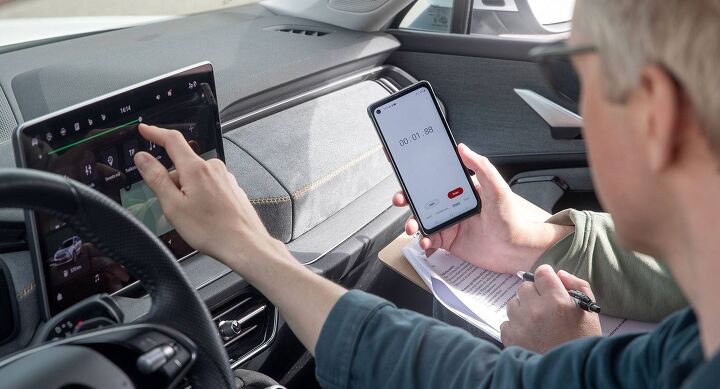
Drivers were timed to determine how long it would take them to turn on the seat warmer, increase the cabin temperature by two degrees, and start the defroster. Then they would change from one pre-established radio station to another, reset the odometer, and dim the instrument lighting to its lowest setting before shutting off the central screen.
“Using the total time, we calculated how far the car travelled during the test. If the driver wandered from the lane or failed to maintain a steady speed, the test was repeated,” explained the outlet.
“We also measured screen distance and viewing angles, tested whether the screen could be used with gloves made from different materials, and evaluated each car’s phone function. A test panel rated the driver environment in each car. We also measured the time from starting the car until the electronic interface woke up and responded to commands.”
This is hardly the first time a group has attempted to determine whether modern vehicle interfaces are more distracting than their older equivalents. The study even makes reference to a similar test conducted by Vi Bilägare in 2022, which used the exact same methodology. Having that data proved that today’s vehicles aren’t just more distracting than the models available decades earlier, they’re also measurably worse than the automobiles that were being assembled just four years ago.
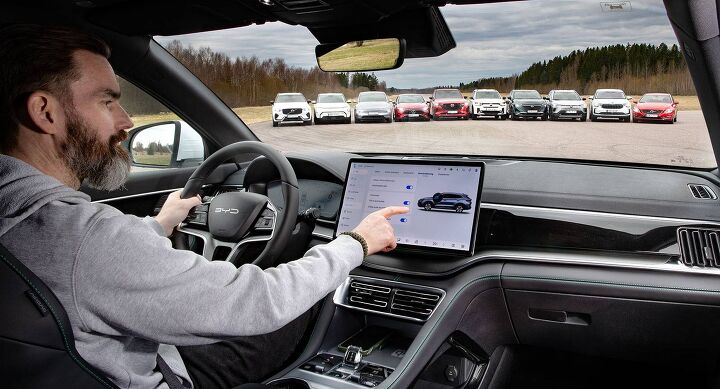
Testing revealed that drivers needed an average of 813 meters, or 889 yards, to complete the requisite tasks. But the distance was just 756 meters, or 826 yards, in 2022, suggesting that newer vehicle interfaces have gotten worse since then.
From Vi Bilägare:
In practical terms, drivers needed around two extra seconds to finish the same type of operations. That may not sound dramatic, but at motorway speed it means a significant stretch of road [was] covered while the driver is focused on menus, icons and settings rather than traffic.
The comparison with 2022 is important because carmakers have had several years to improve digital interfaces. Screens have become larger, sharper and often better positioned.
In theory, that should make them easier to use. Yet the overall result has got worse, not better.
However, the outlet did not attribute the issue entirely to manufacturers using touch controls. It suggested a poorly designed layout could create similar problems (buttons or no) and noted that some companies had seen improvements since 2022. For example, the brand-new 2026 Tesla Model Y had performed significantly better than the Tesla Model 3 that had been tested four years earlier.
Drivers of the older Tesla needed over 100 extra meters to accomplish the same tasks during testing. This is despite both vehicles sharing nearly identical, buttonless layouts that are overwhelmingly dependent upon a singular central touchscreen.
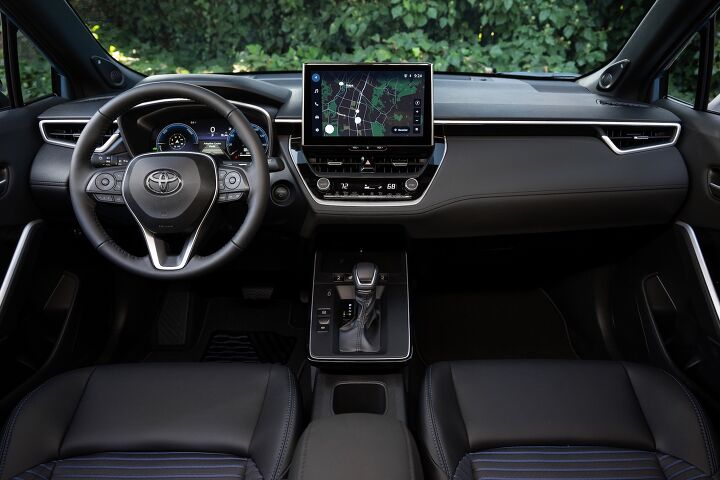
There were likewise significant differences between other models. In the batch of automobiles tested for 2026, drivers of the Mazda CX-60, Mercedes-Benz CLA (top of the page), and Toyota Corolla Cross (bottom) all needed over 1,000 meters to complete their given tasks. Meanwhile, the Tesla Model Y, Skoda Kodiaq, and Volvo XC60 never averaged more than 608 meters during testing.
This may lead you to believe that touchscreens can be just as safe as mechanical controls. But the data doesn’t actually support that claim without there being some major caveats.
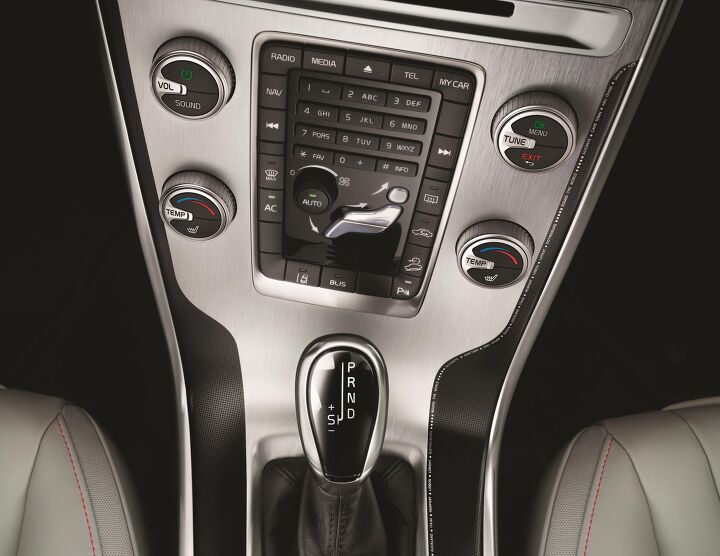
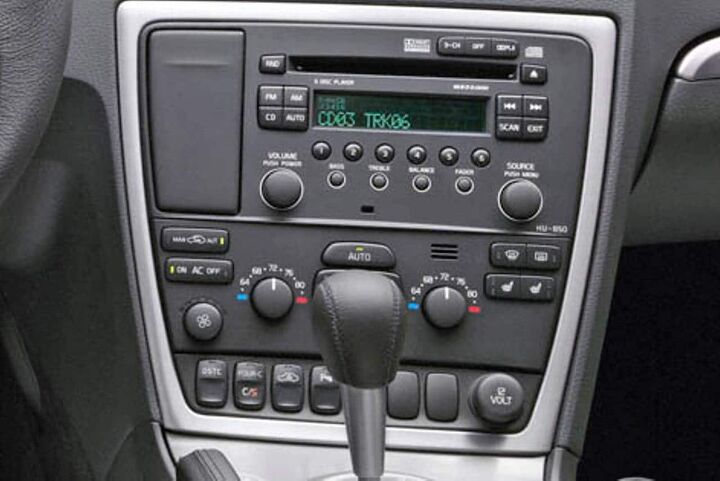
Researchers had included a 2016 Volvo V60 and 2005 Volvo V70 as part of the testing. The V60 (pictured above) uses an extremely small menu screen that’s controlled by a somewhat confusing pad of physical buttons, switches, and knobs. It needed an average of 863 meters for drivers to complete their tasks, putting it on the more distracting end of the spectrum. By contrast, the even older V70 only needed 300 meters — making it one of the least distracting vehicles.
But the 2005 model year Volvo (pictured below) is old enough to predate screens or menus. It likewise has its large physical controls spaced out intuitively. This allowed testers to operate them quickly, and often without needing to take their eyes off the road, likely making it the safest vehicle in terms of not distracting the driver.
We assume this trend would continue if more vintage automobiles had been included in the research. Other testing has shown that physical controls that are properly spaced are quicker for motorists to learn and significantly easier to operate while multitasking. But screens always require a driver to use their eyes while they flip through various menus.
Barring a particularly bad interior layout (like that 2015 Volvo V60), it seems inarguable that touchscreens will always be more dangerous. But how much more dangerous will likely depend on exactly how they’ve been designed (e.g. positioning menu complexity, etc). Vi Bilägare suggested that the sizing up screens may have been a good thing. But several of the vehicles that performed the worst during testing featured the largest displays, so we’re not wholly convinced.
The outlet likewise conceded that touchscreens will persist in future vehicles, despite the potentially elevated risk factors. However, we see no reason it needs to be the case. Physical controls could absolutely make a resurgence, whether or not screens are abandoned, and doing so would probably improve safety by a measurable amount. Automakers have primarily prioritized screens to save money on manufacturing costs while simultaneously trying to herd motorists into using their connected services and proprietary software.
You’re encouraged to make up your own mind, however, and are welcome to examine both the 2026 and 2022 Vi Bilägare studies yourself.
[Images: Mercedes-Benz; Niklas Carle/Vi Bilägare; Volvo Cars; Toyota]
Become a TTAC insider. Get the latest news, features, TTAC takes, and everything else that gets to the truth about cars first by subscribing to our newsletter.
from TheTruthAboutCars https://ift.tt/Sekvjgt
via IFTTT
No comments