There’s Now A National Holiday Opposing Automated Traffic Cameras
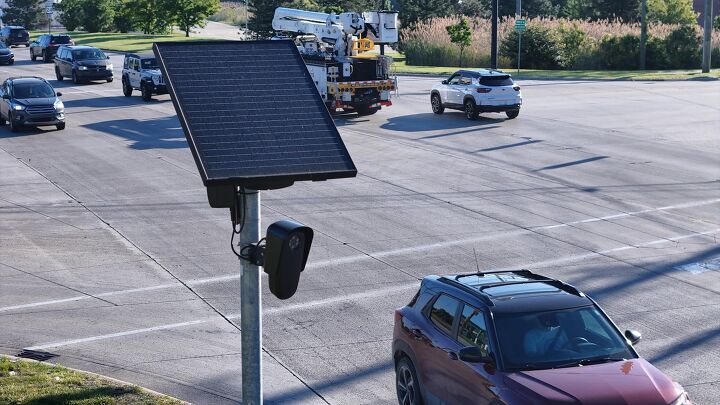
Next month, privacy groups are planning a “National Week of Action” against automated license plate readers. This comes after sustained criticisms against companies like Flock Safety.
Starting on August 16th, DeFlock wants to establish an entire week where concerned citizens make it absolutely clear that they do not want AI-assisted surveillance tools installed within their communities. The group has set up a website that explains the background behind the cameras and how best to organize against them next month.
“Automated license plate readers (ALPR) have become a staple of policing across the United States,” reads the event page. “From the smallest town to the largest city, we are all constantly being watched, tracked, and cataloged. ALPRs scan millions of plates daily giving police enormous unchecked power that challenges our constitutional rights.”
“Over the last year, thousands of people across the country have risen up and said no to these private, profit-driven companies blanketing our cities, towns, and communities in ALPR. Contracts are being cancelled and we're dismantling the surveillance infrastructure. Join us and add your city to the growing list saying no to ALPRs.”
While there are numerous planned events by communities already verified to participate this August, the site makes additional suggestions on how anybody can oppose ALPRs. These include things like canvassing, marching in protest, attending town hall meetings, running scavenger hunts to identify cameras in your county, and setting up local outreach events where residents can learn about the situation.
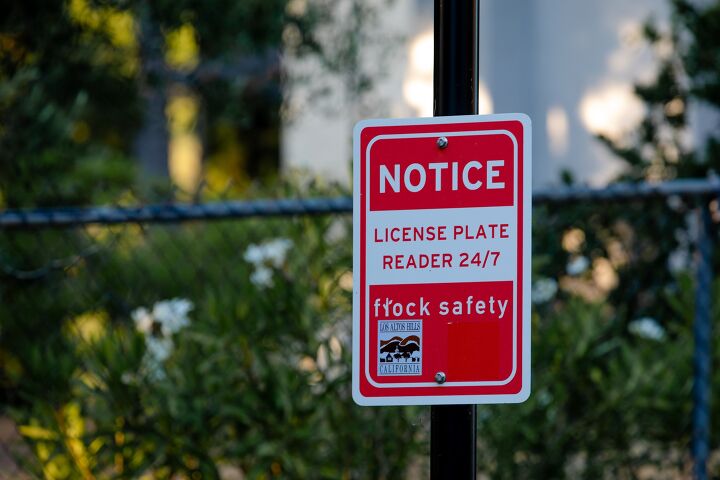
As noted above, action has already been taken by scads of citizens. City council meetings scheduled to discuss Flock cameras (or other types of ALPRs) now routinely see large groups of people showing up to oppose their implementation. While these protests sometimes fall upon deaf years, many municipalities have received so much backlash that they’re now cancelling the relevant contracts.
In Ohio, we’ve seen Dayton and Cleveland both let their preexisting contracts expire as public criticisms mounted ( the latter of which later renewed). In Wisconsin, Dane County, Sturgeon Bay, Oshkosh, and Fitchburg all decided to end their relationship with the company due to sustained allegations of misuse and complaints about privacy. We’ve seen contracts cancelled from Austin, Texas, to Cambridge, Massachusetts — with estimates of there being upwards of 100 cities that no longer want to do business with Flock cameras.
Despite this, it still appears that the total number of AI-assisted traffic cameras (including those offered by Flock Safety) has continued to grow inside the United States. Some of the regions that opted to stop using ALPRs have even quietly re-upped their contracts, swapped to a different company, or seen the local police force continuing to use them by asking other departments for access.
Many of these cameras are starting to be issued new features — including facial recognition, done integration, and wireless signal tracing — that law enforcement seems to be very excited about. We can also assume there’s a lot of lobbying pressure behind the push, as some of these companies are making a fortune on unfettered surveillance. Flock alone is estimated to be worth roughly $7.5 billion (USD) and that has undoubtedly helped it make inroads with thousands of law enforcement agencies, home owner associations, and private businesses.
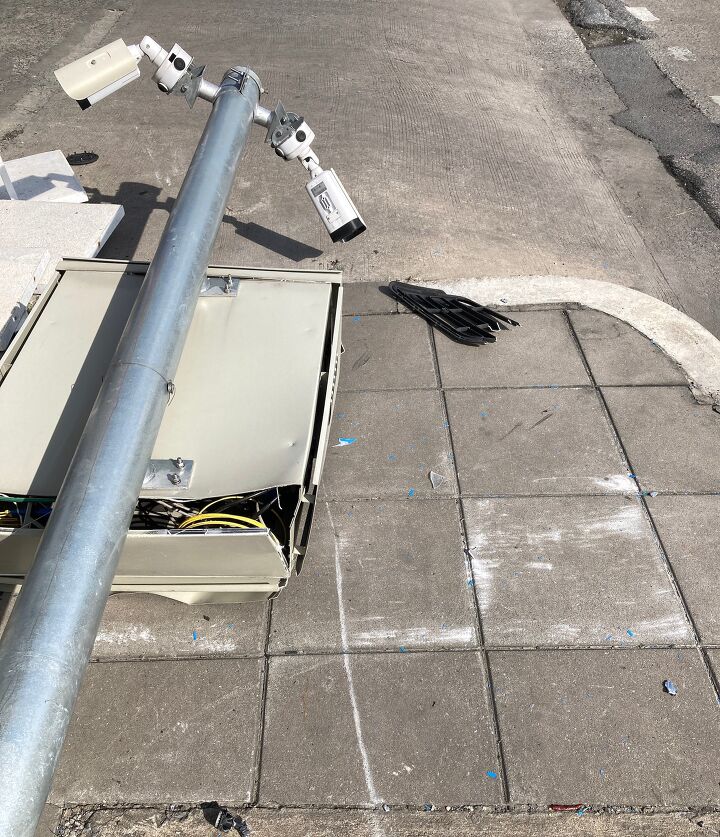
But this has not made these companies any more popular with the general public and we’re now seeing individuals take it upon themselves to destroy the cameras. Actions have entailed burning the devices with high-powered lasers, spray painting the lenses, or simply cutting down the pole and bashing the units with something hard. Needless to say, the methods of destruction vary quite a bit. But the rationale behind them always tends to boil down to people not wanting to be surveilled.
The core argument is that these devices violate American’s Fourth Amendment rights and that the government has used private companies to excuse themselves from illegally tracking citizens. These criticisms are shared by numerous entities that now formally oppose ALPRs, including the American Civil Liberties Union (ACLU), Institute for Justice, local residents, privacy advocates (e.g. Electronic Frontier Foundation), and more-focused groups like DeFlock — that latter of which hosts a website that tracks every known location of the devices inside North America.
Last year, Flock Safety CEO Garrett Langley went so far as to call DeFlock a terrorist organization and compared them to Antifa. His claim was that the group was effectively showing people where its cameras were located so that they could be avoided or destroyed. Ironically, he was making an argument that these nationwide surveillance devices should be afforded privacy and that anyone opposing that stance was effectively a criminal.
In terms of catching individuals who are destroying the cameras, the authorities don’t seem to be having much luck. Numerous departments have issued public statements urging people to come forward after cameras were destroyed. But the locals frequently seem like they don’t know anything or simply aren’t interested in cooperating with the investigations.
Among those that have been caught, there seems to be a trend that they want to make the case a federal issue in the hopes that higher courts will prohibit law enforcement from using ALPRs in the future. This has certainly been the case for Jeffrey Sovern, a U.S. Air Force engineer accused of cutting down over a dozen cameras owned by Flock Safety on the grounds that they're blatantly unconstitutional.
Mr. Sovern is making the same arguments as those protesting the devices without tearing them down, which typically revolve around warrantless surveillance, sharing data across jurisdictions without going through the proper channels, and widespread departmental misuse.
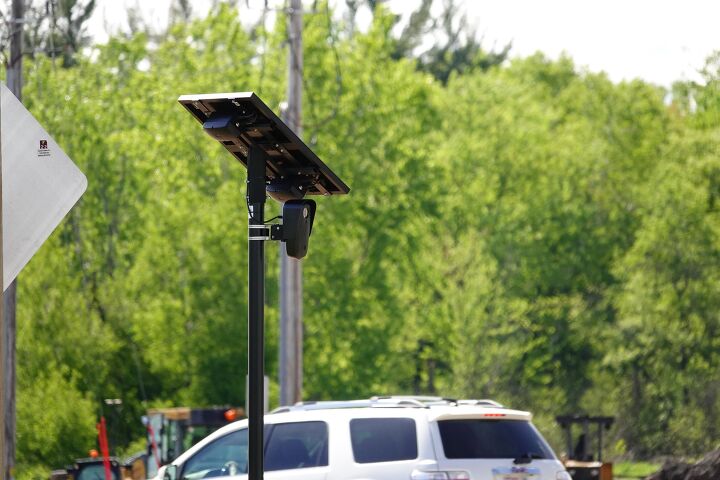
There have also been numerous instances where these systems mistakenly identified the wrong automobile. This has led to wrongful arrests and countless hours of wasted time as police spent their day investigating someone who had done nothing wrong. The Drive actually just reported on an incident where this exact scenario had played out for one of its auto writers because the AI-assisted search tool flagged a review vehicle that had a license plate that matched a few characters of an SUV that had been stolen in another part of the country.
Other encounters have gone much worse, with several ending with the wrong people being held at gunpoint or even jailed for crimes they did not commit. Additionally, we have well over a dozen proven cases where police officers had used the software associated with ALPRs to illegally stalk people — typically current or former romantic partners.
More recently, we’ve seen complaints that the cameras are being installed in places where traffic isn’t even visible. Residents have been sharing videos where Flock and other ALPRs have been set up to monitor public parks and residential areas. This is despite the companies initially framing them as traffic enforcement tools. Combined with the fact that many devices have started to incorporate facial recognition software and wireless device tracking, people have started to become concerned that these cameras are being utilized in a manner that goes far beyond what was originally promised.
By all indications, it looks like the companies selling these cameras aren’t interested in backing down. But neither are the people that want them removed. Opposition to the devices looks to be growing across the country rather rapidly, with Flock serving as the primary target. With that in mind, it’s hardly surprising that we’re seeing the “National Week of Action Against ALPRs.” Thus far, the website has already confirmed that over 75 cities will be participating in the event.
This isn’t that surprising. There’s been a grassroots media campaign focused on these camera networks that’s been gaining traction for at least twelve months and we’ve already seen how residents of the United Kingdom have responded to their own ULEZ cameras. While we don’t have any hard data to support that a majority of people oppose traffic cameras, it’s abundantly clear that a significant portion of the population does not want anywhere near their homes.
Flock has attempted to get DeFlock and similar websites taken down by threatening legal action in the past. We imagine it will attempt to do the same with the groups attempting to organize for the upcoming National Week of Action. However, it seems unlikely that it will be able to prevent any events from taking place due to the decentralized manner in which they’re organized.
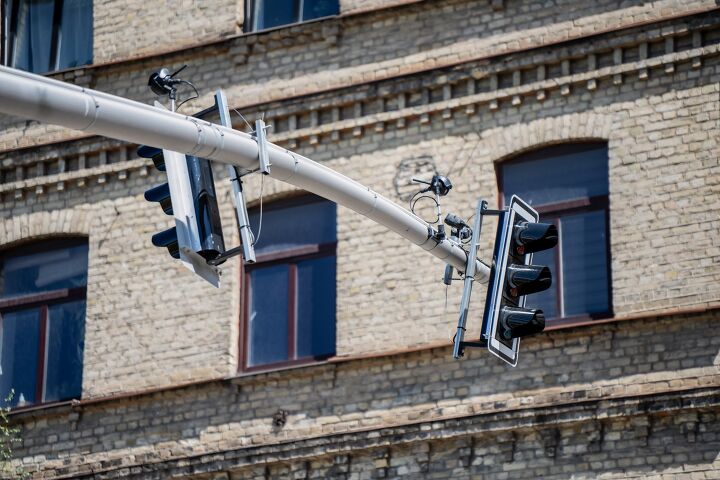
[Images: Matthew G Eddy/Shutterstock; bluestork/Shutterstock; Kanchana P/Shutterstock; Aaron of L.A. Photography/Shutterstock; kphoyteroe/Shutterstock]
from TheTruthAboutCars https://ift.tt/mvqYZV0
via IFTTT
No comments