Trump Snubs USMCA Renewal
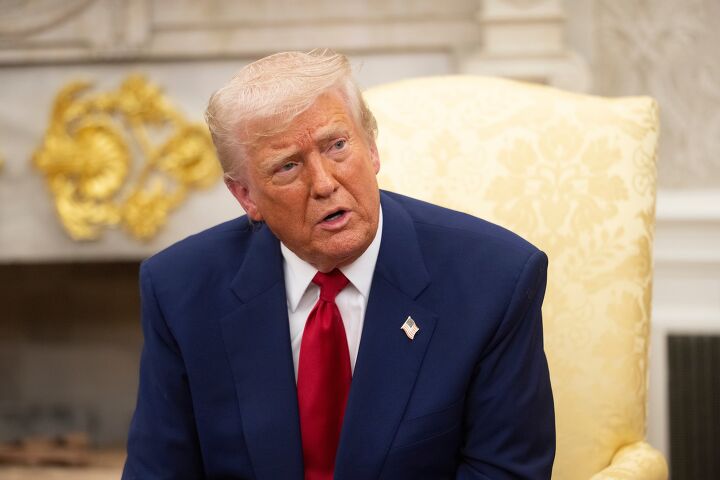
Despite advancing the United States-Mexico-Canada Agreement (USMCA) as a replacement for the North American Free Trade Agreement (NAFTA) during his first term, President Donald Trump announced he has become much less interested in renewing the trade deal — a deal that he created.
On Wednesday, White House officials were quoted as saying that Trump decided not to renew USMCA. The United States will instead be launching independent trade negotiations with Mexico and Canada. The U.S. has been talking with each country individually since March in preparation for in-depth negotiations scheduled to begin July 1.
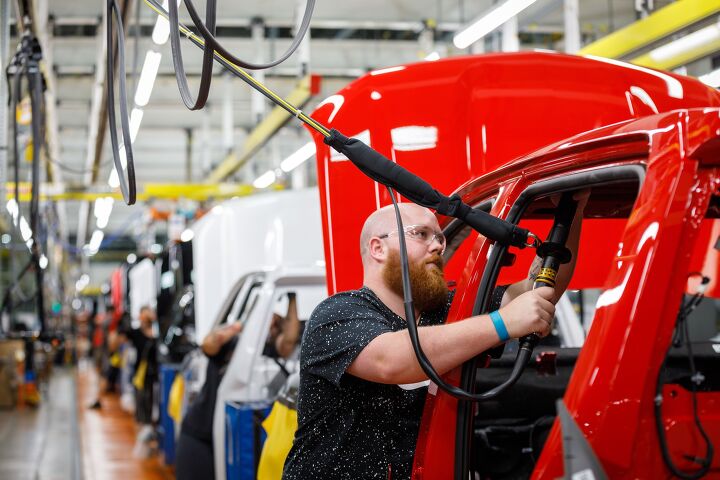
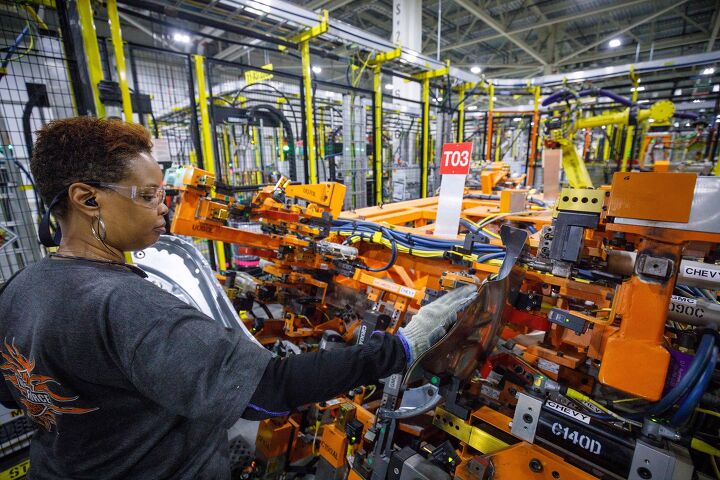
While the arrangement encompasses all manner of issues, the most relevant to our readership were the sweeping changes to automotive content requirements. In order to avoid certain tariffs, vehicles would be required to have to meet highly specific quotas for domestic materials, parts, and labor.
Initially, USCMA faced a lot of criticism. Negotiations were reportedly quite ugly and many were annoyed about the new content requirements, often for differing reasons. Some were upset that anything other than U.S.-based labor would be considered “domestic” and others were worried that the scheme would place an enormous handicap on imported vehicles. There were also concerns that the industry would need to make extensive changes to accommodate new rules under the new trade agreement — potentially driving up the cost of vehicles and creating regional supply chain issues.
While that did end up happening, very little of the blame fell upon the trade agreement. In fact, the USMCA has received a fair bit of praise since initially being signed. Within the six years it’s been in play, the industry has made the necessary adjustments and enjoyed a period of peak profitability while production levels remained largely suppressed. Despite there now being some dark clouds on the horizon for the automotive industry, nobody seems to be faulting the trade deal.

The plan was to renew the USMCA for another 16 years. But the Trump administration had been signaling that it may be getting cold feet since last December. The White House floated numerous alternatives, including putting the USMCA on a revised renewal timeline or simply scrapping the plan to engage in fresh trade negotiations.
This was surprising, since Trump has stated on numerous occasions that it was easily the best and most consequential trade deal in the history of the United States. But the White House has insisted that the president believes that some of the goals he set out to accomplish by supplanting NAFTA with USMCA had not yet been achieved.
“The primary issues that the president’s been focused on with the world, and particularly with Canada, Mexico, is our trade deficit,” the White House stressed to reporters on Wednesday.
“When USMCA was adopted six years ago by a bipartisan majority and the president’s approval, the idea [was] that we would modernize the agreement and it would also lead to rebalancing. The agreement did succeed in modernizing the agreement … But with respect to rebalancing, our trade deficits with both Mexico and Canada shot up during the Biden administration.”
Analysts are viewing this as more of Trump’s tough-on-trade policy. While he’s often been focused on trade, his second term has shown him to be aggressive on imposing tariffs. The assumption is that he wants more domestic production inside the United States, with renegotiations presumably focusing on more of the same. But there are lingering concerns that this could destabilize trade relations even further.
Officially, the White House claims that the current plan will be annual renewals that include a “joint review” of the regional trade policy. Some have suggested this effectively keeps the USMCA in place over the next ten years. But there will be no way of knowing that until those meetings commence.
While it does seem like USMCA will continue to serve as the foundation of subsequent trade talks, there’s also a chance that Canada, Mexico, and the United States will be wiping the slate clean on a regular basis each year until 2036.
This presumably isn’t something that the automotive industry wants to hear, as the relevant companies need to plan development and production years ahead of time. Ideally, automakers want stable trade policies that they’ve influenced. Annual reviews could effectively become yearly renegotiations that come with revisions that they’ll need to take into account.
The American Automotive Policy Council has said as much, announcing Wednesday that it would like to see the three countries remain integrated in terms of trade. But it seems willing to accept just about anything, provided the resulting arrangement lasts long enough to limit the number of hurdles the industry has to jump through.
It’s far too early to assume what any would-be alterations to the present trade deal will entail and we imagine the White House will spend the next several weeks explaining how the review process is supposed to function.
Mexico and Canada were clear that they both wanted to see the USMCA renewed for the full 16-year period. Mexican President Claudia Sheinbaum and Economy Minister Marcelo Ebrard had both publicly expressed this in the past. Canadian Mark Carney was likewise on board with the renewal. This shouldn’t be a surprise as the deal does seem to have boosted trade between the three countries by roughly a half trillion dollars annually.
While Mexico hasn’t said much about the Trump administration’s recent decision, Canada immediately reiterated its desire to simply renew the USMCA and even threw some tasteful criticism at the United States. Dominic LeBlanc, the Canadian minister responsible for trade relations with the U.S., noted that Canada remained a “stable, reliable, and trusted trade partner” during “a time of global economic uncertainty” on Wednesday — which is a pretty fair dig when your biggest trade partner just expressed a not so vague desire to back out of a deal.
That said, all of these countries want to maximize their own advantages and that sometimes places them at odds with each other.
Canada's bilateral trade agreement allowing up to 49,000 Chinese electric vehicles to enter the market annually at reduced tariff rates may have influenced the Trump administration's decision this week. Even if it did not, one imagines it'll come up during negotiations whenever the U.S. wants something. Trump has been pretty clear that he wants to keep Chinese vehicles out of North America since his first term and made a fuss over Canada's EV deal with China. Accusations were made about how it effectively violated the USMCA.
However, there will be plenty of things for officials to discuss that has nothing to do with cars. We ought not to forget that the automotive sector is only a portion of any forthcoming trade talks — even if it happens to be a highly relevant one.
Depending on how these negotiations play out, we expect Canada to continue expressing its dismay. The same will almost certainly be true for Mexico. But the latter nation tends to be a little less willing to publicly share its grievances with the U.S. and we’re likely spared from hearing some of that due to the language barrier. But their shared concern will undoubtedly be trying to determine how much ground the United States will attempt to take as part of these trade reviews.

[Images: noamgalai/Shutterstock; Golden Shrimp/Shutterstock; John Gress Media Inc/Shutterstock]
Become a TTAC insider. Get the latest news, features, TTAC takes, and everything else that gets to the truth about cars first by subscribing to our newsletter.
from TheTruthAboutCars https://ift.tt/uTJaHAU
via IFTTT
No comments