Why Cadillac's V-Series EVs Can't Hot-Lap Yet
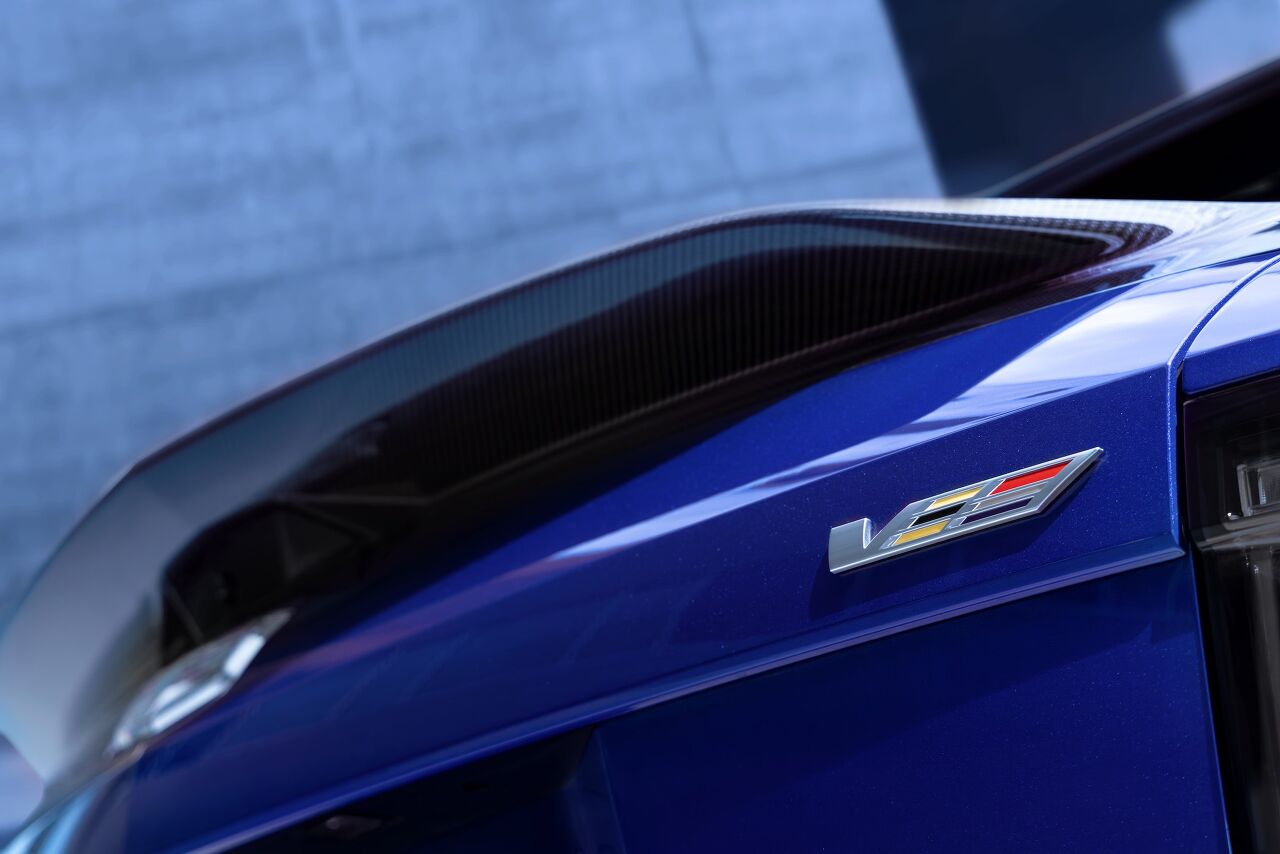
Cadillac slaps the V-Series badge on its electric cars, but the brand will tell you plainly that those cars are not built to run a race track lap after lap. The holdup is heat. The battery pack and electric motors throw off excess warmth that keeps building the longer you drive hard, and once it crosses a threshold, the car scales back power to protect itself. That is fine for a canyon road. It is a problem on a circuit, where the second lap needs to be as quick as the first.
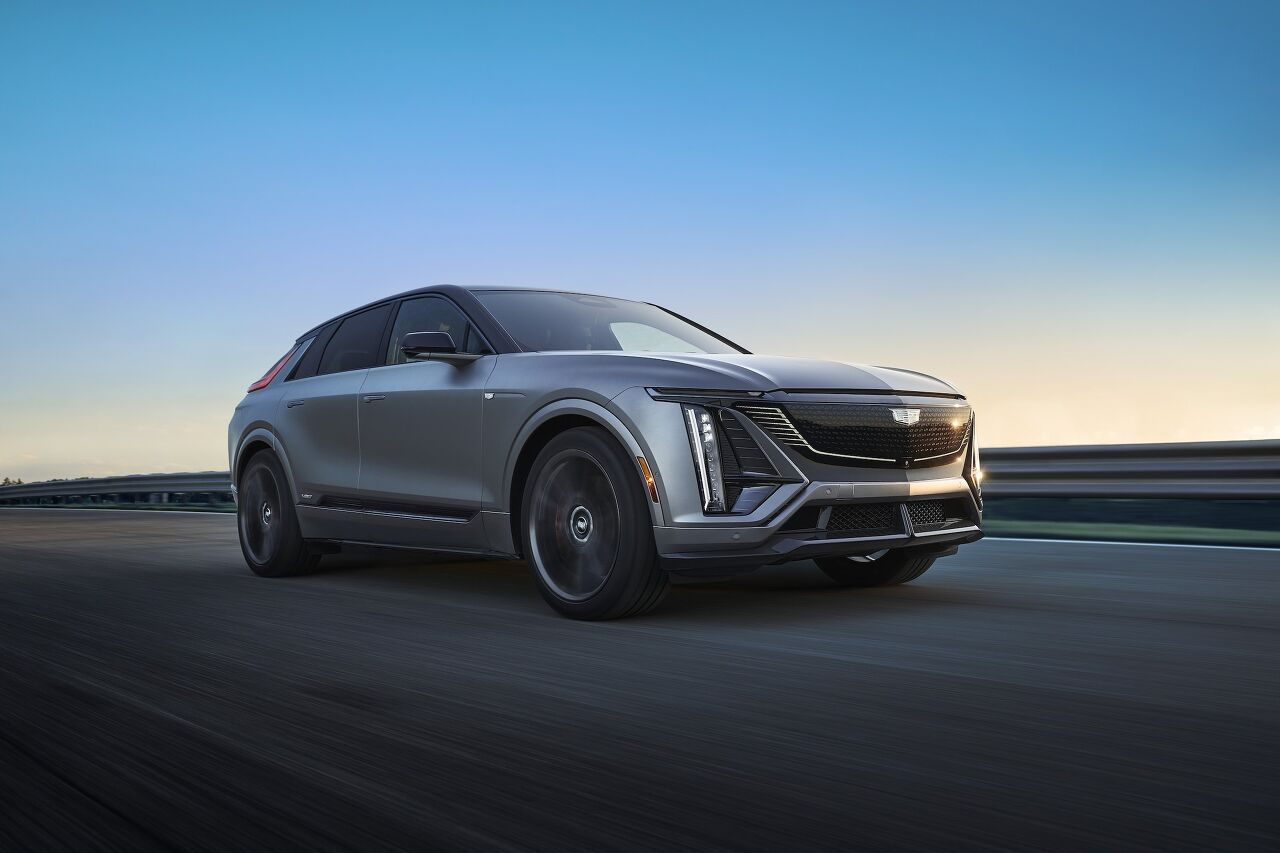
Cadillac vehicle performance engineer Tom Schinderle, who works on the gasoline CT5-V Blackwing, put the current state of the EV program in blunt terms. The electric V-Series cars are tuned for "canyon carving, spirited driving," not full track performance. The company has even built track-capable electric concepts internally, but it will not badge them or sell them until they clear GM's own durability bar.
Pushed hard, a battery and a set of motors heat up, and hot cells cannot deliver their rated output. Schinderle identified thermal management as the main obstacle keeping Cadillac's electric performance models from meeting GM's internal standards. In performance EVs broadly, heat that builds up in the pack and drive units tends to throttle output after a single fast lap.
This is not a theoretical concern buried in an engineer's spreadsheet. GM documents the behavior for owners. When the high-voltage battery pack runs beyond its ideal temperature window in either direction, it may fall short of the power output expected of it, and the car responds with messages like "Reduced Acceleration, Drive with Care" and "Propulsion Power Reduced Due to Temperature."
The state of charge at which power gets throttled shifts with battery temperature. At a moderate pack temperature around 68 degrees F, reduced propulsion typically shows up only down near 5 percent to 10 percent charge. Get the pack very warm, though, such as right after a fast charge in extreme ambient heat, and reduced propulsion can arrive at any state of charge.
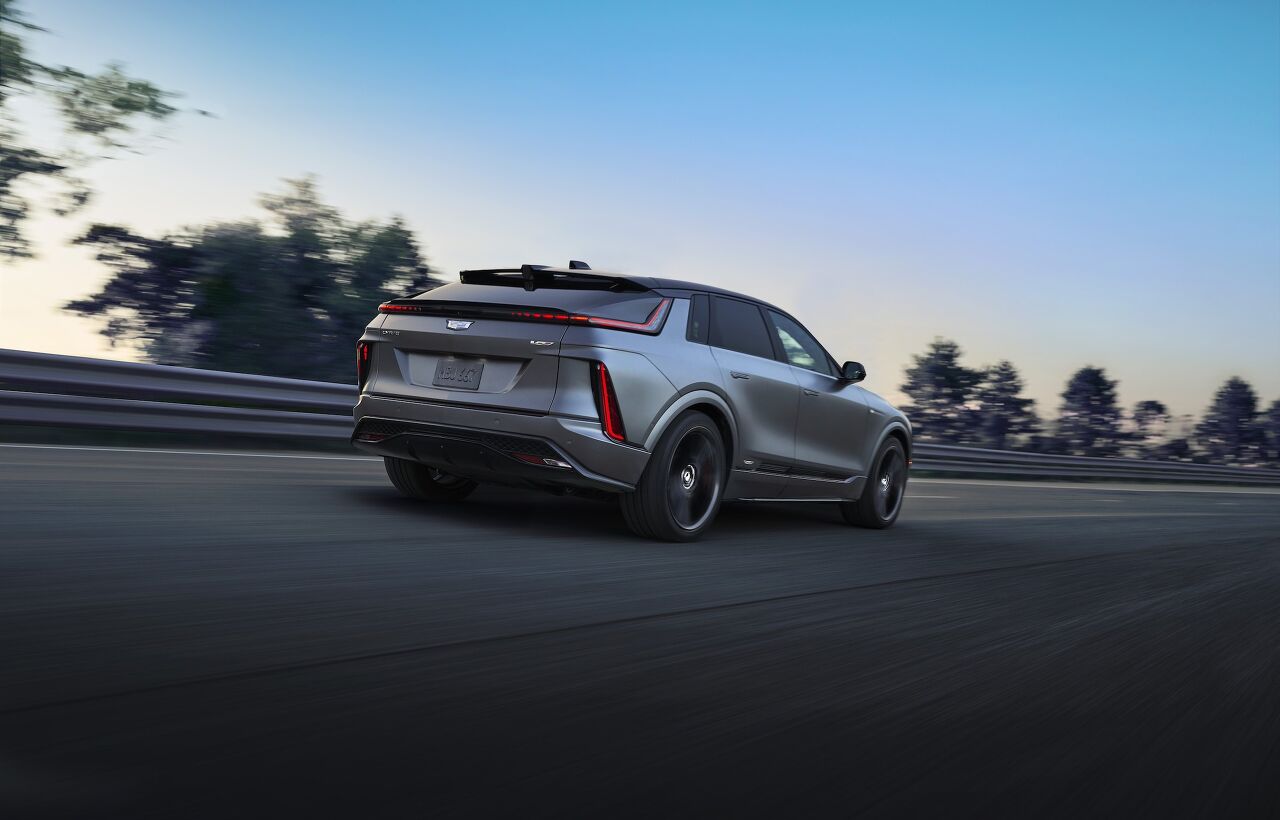
So the car protects itself by cutting power when it overheats. That is exactly the wrong trait for a track toy, where overheating is the baseline condition rather than the exception.
A spirited run up a mountain road involves bursts of hard acceleration followed by braking and coasting, which gives the cooling system room to catch up. A track lap removes those breaks. You are at or near full commitment for a sustained stretch, repeatedly, with no highway cruise to let temperatures settle.
Schinderle framed the goal as building a car that can do it "lap after lap after lap," and that phrase is the dividing line between a quick road car and a real track machine. Cadillac is not willing to call something track-capable until it can sustain performance across repeated laps rather than fading after the first.
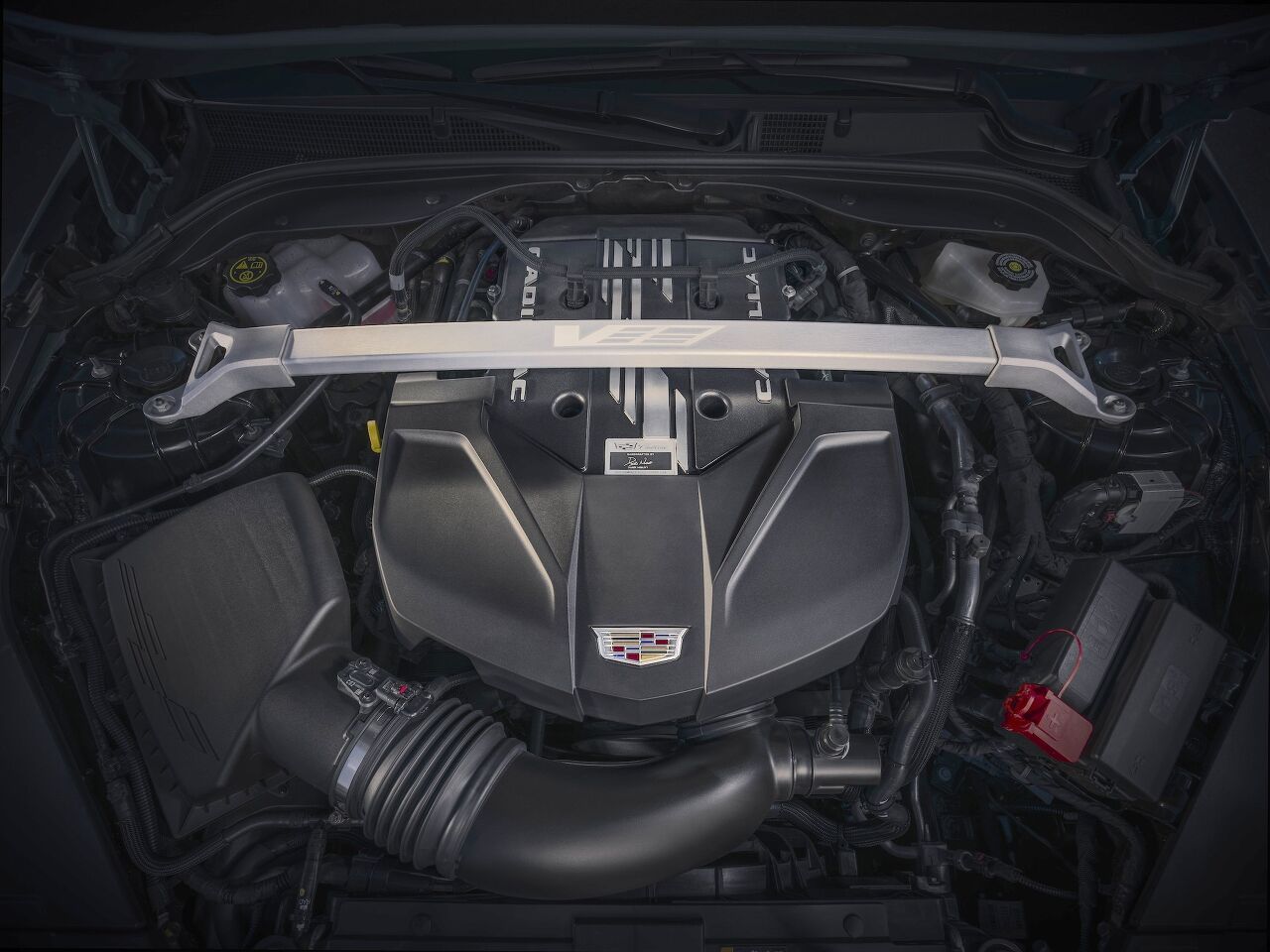
Cadillac's current benchmark for track endurance is not electric at all. The car that holds up best on track is the CT5-V Blackwing, powered by a supercharged 6.2-liter V8 rated at 668 horsepower and 659 pound-feet of torque. It even offers a Precision Package built specifically to sharpen track behavior.
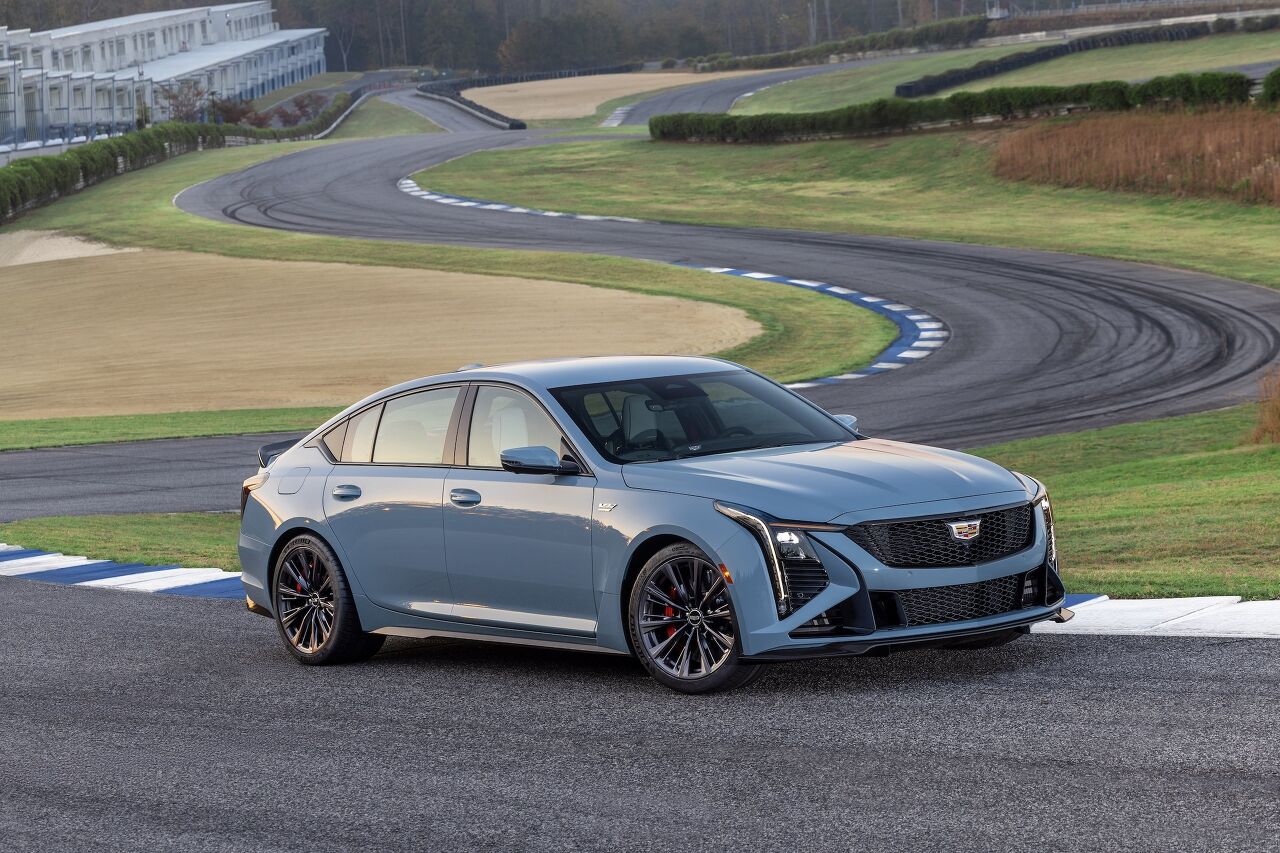
Schinderle pointed to those combustion sedans as proof of what Cadillac expects. He told CarExpert that the V-Series ICE sedans can run "lap after lap after lap," and that the company is investigating the same for its EVs but is "just not quite ready to commit to that yet."
Some of the holdup is self-imposed. Cadillac says it already has electric concepts that can take on a race track, but those concepts have not "passed all of our internal benchmarks that are critically important." Schinderle credited GM's internal rules for the gap, saying the company holds itself to durability standards "stricter than our counterparts and our competitors."
This is not the first time a Cadillac engineer has named the culprit. Lyriq-V lead development engineer Alex Doss has made the same case before, naming battery weight and cooling as the big obstacles to a Blackwing-badged EV. Two engineers, same conclusion: the electrons are fast, the thermal plumbing is not there yet.
Today's V-Series EVs are not without a track-flavored setting. They include a Competitive Mode that, in Schinderle's words, backs out traction control "ever so slightly" and shifts the front-to-rear power split toward the rear so the car can step out on corner exit. He described the result as making the car more agile "just on a corner exit."
That is a handling tweak, not an endurance solution. It changes how the car behaves in a corner. It does nothing about the heat that forces a power cut on lap two. The feature owners might actually want for the track, a layered traction system, is still on the wish list. Schinderle suggested a progressive traction management system comparable to the one on the ICE Blackwing could eventually reach the EVs, but only once a Cadillac EV is signed off as capable of repeated hot-lapping. His phrasing was conditional: when the cars get to that point, "that's when the progressive traction control would make it." Thermal first, then the software.
If you push one of these cars hard and watch the power fade, you are not looking at a broken car. GM classifies the "Reduced Acceleration," "Drive with Care," and "Propulsion Power Reduced Due to Temperature" messages, along with the limited power that comes with them, as normal operating responses when battery power is limited by charge or temperature. The behavior spans much of GM's EV range, not just Cadillac, including the Lyriq, Optiq, Celestiq, and Escalade IQ as well as the Hummer EV, Silverado EV, Sierra EV, and Blazer EV.
Tellingly, the condition sets no propulsion-related diagnostic trouble codes, even though a propulsion-limited warning light may come on. There is nothing to fix because nothing is wrong. The car is doing what it was programmed to do.
If you drive a V-Series EV and want to enjoy it, keep its limits in mind rather than fighting them. In hot weather, GM recommends reducing cabin cooling so the system can divert more cooling to the battery when the pack is at 20 percent charge or higher. In the cold, keeping the car plugged in after a full charge helps maintain pack temperature for the next drive. These steps smooth out the power-limiting behavior in daily use, but they will not turn a canyon car into a track car.
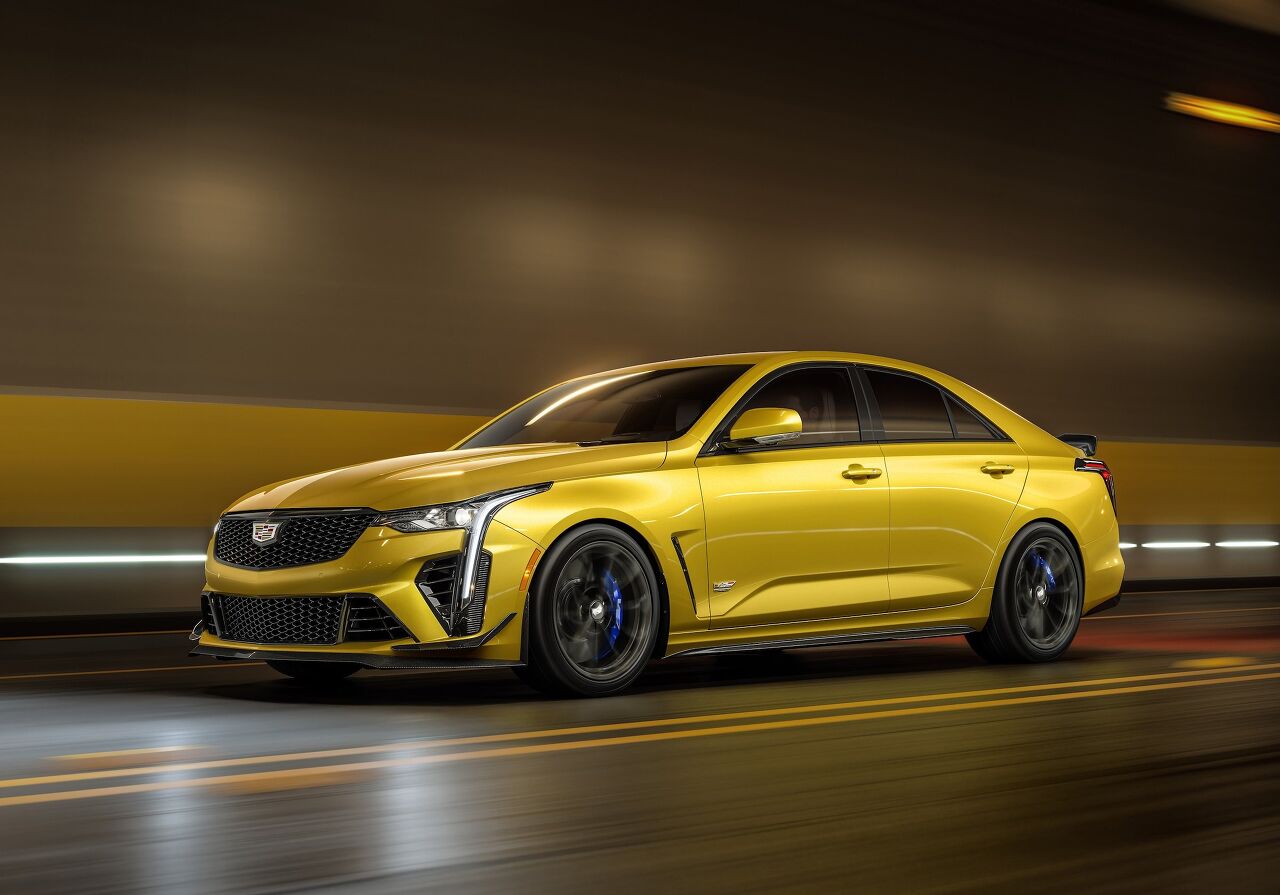
For actual circuit duty, the honest answer today is the gasoline CT5-V Blackwing, with a next-generation version expected down the road. Cadillac's electric performance cars are quick in a straight line and lively on a back road, and the brand is clearly working the thermal problem.
Just do not buy one expecting it to survive a track day session without pulling its punches. When Cadillac is confident an EV can hold up lap after lap, it will say so, and the progressive traction tools will follow. Until then, the V badge on an electric Cadillac is a promise about the road, not the paddock.
[Images: Cadillac]
Become a TTAC insider. Get the latest news, features, TTAC takes, and everything else that gets to the truth about cars first by subscribing to our newsletter.
from TheTruthAboutCars https://ift.tt/bukNyJ7
via IFTTT
No comments